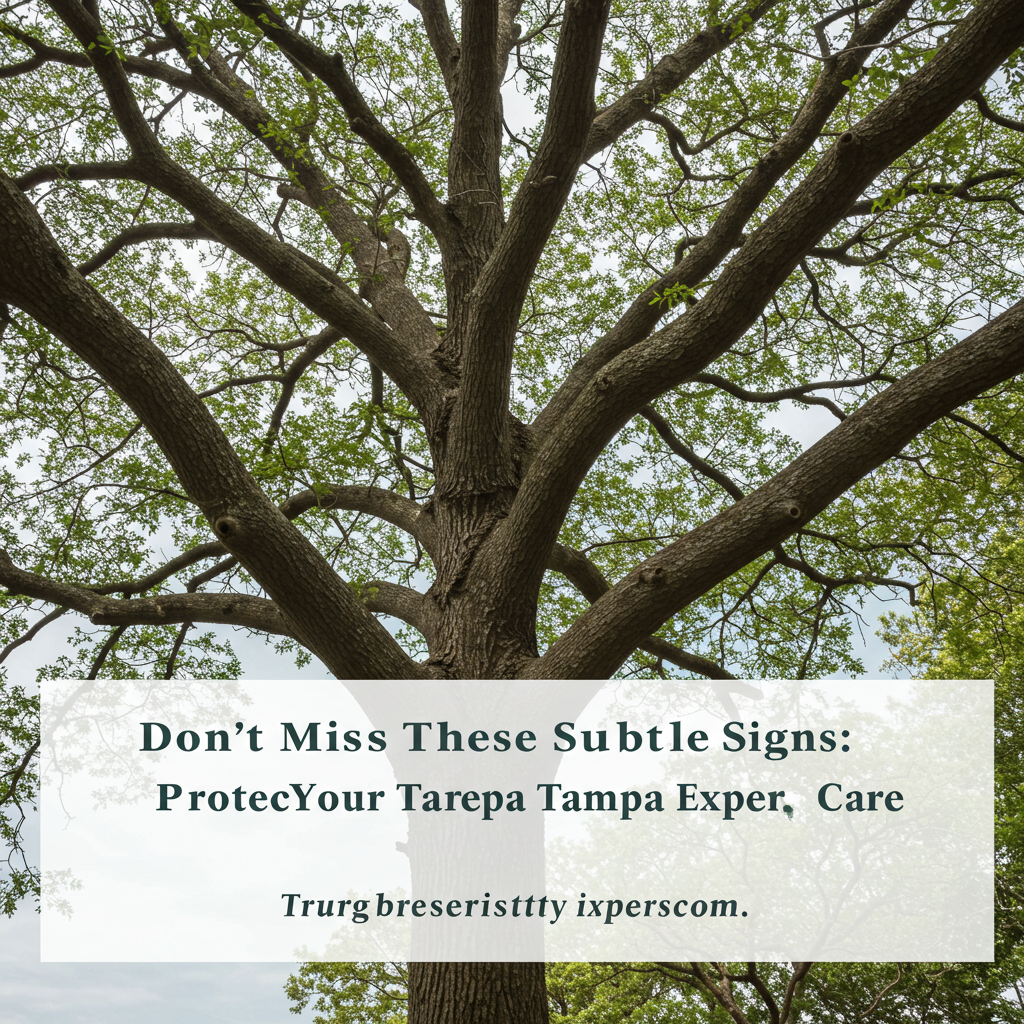
Don't Miss These Subtle Signs: Protecting Your Tampa Trees with Expert Care
Beyond obvious wilting or pests, subtle signs like minor leaf discoloration, abnormal growth patterns, small dead branches, or unusual bark changes can indicate early tree distress in Tampa's unique climate, necessitating prompt professional evaluation.
Why Do Tampa Homeowners Often Miss Early Tree Distress Signals?
Trees, while robust, are living organisms susceptible to a myriad of issues, especially in Tampa’s humid, subtropical climate. Homeowners often interact with their trees daily but may overlook initial symptoms of distress. This isn't due to a lack of care, but rather a lack of specialized knowledge in tree pathology and physiology. Many common tree problems start small, manifesting as barely perceptible changes before escalating into significant health crises. For instance, a slight yellowing of leaves might be dismissed as seasonal change, but it could signal nutrient deficiencies or root problems. Early detection is paramount because trees, unlike many other plants, take years to establish and even longer to recover from severe damage. Ignoring these early warning signs can lead to weakened trees, increased susceptibility to pests and diseases, and eventually, the need for costly removal, especially when dealing with large, mature specimens.
Understanding the unique environmental stressors in Tampa is also crucial. Factors like sudden downpours followed by prolonged dry spells, strong winds, and sandy soils can exacerbate underlying tree health issues. Homeowners may not connect these environmental shifts to subtle changes in their trees, assuming the trees are simply adapting. However, these adaptations might be signs of significant stress. Professional arborists, deeply familiar with Tampa's specific ecosystem, are trained to interpret these complex interactions between environment and tree health, providing a level of insight that most homeowners simply cannot possess.
What Subtle Visual Cues Indicate a Struggling Tree in Tampa?
While severe tree issues like widespread defoliation or massive limb failure are impossible to miss, many critical problems begin with more discreet visual clues. Being able to spot these early indicators can make all the difference in saving a tree.
- Leaf Changes:
- Subtle Discoloration: Beyond seasonal browning, look for faint yellowing between veins (chlorosis), reddish or purplish tints on leaves, or an overall dullness compared to healthy foliage. These often point to nutrient deficiencies, improper pH levels in the soil, or even early disease.
- Unusual Leaf Drop: While some trees are deciduous, premature or excessive leaf drop outside of their normal cycle can signal stress from drought, disease, or pest infestation.
- Smaller or Stunted Leaves: If new leaves are consistently smaller than average or growth appears stunted, the tree may be struggling to absorb adequate water or nutrients, or it could be under attack from root diseases.
- Bark Anomalies:
- Minor Cracks or Peeling: A healthy tree’s bark should be relatively consistent. Unexplained cracks, peeling in areas where it shouldn't, or the presence of lesions can be entry points for pests or indicate internal decay.
- Fungal Growths: Small mushrooms, conks, or other fungal bodies growing on the bark or at the base of the tree are often a sign of advanced internal decay, even if the tree still looks outwardly healthy.
- Sap or Resin Exudation: Excessive sap oozing from the bark, especially with discoloration, can indicate a pest boring into the tree or a fungal infection trying to escape.
- Branch and Twig Observations:
- Sparse Canopy: A thinner-than-normal crown, where you can see more sky through the branches, suggests a tree struggling to produce sufficient foliage due to stress or disease.
- Minor Dieback: Small dead twigs or branches appearing in the inner canopy, or at the tips of larger limbs, are often the first signs of vascular disease or root issues, working their way up the tree.
- Odd Growth Patterns: Branches crossing and rubbing, or unusually dense, twiggy growth (witches’ brooms) can indicate disease, insect activity, or structural weakness.
- Trunk and Root Collar Issues:
- Faint Leaning: A tree that develops a slight, gradual lean over time, especially after a storm, could have compromised roots or internal decay affecting its stability.
- Soil Heaving: Slight lifting or cracking of the soil around the base of the trunk can be an early indicator of root decay or instability.
Are There Non-Visual Signs of Tree Health Issues Tampa Residents Should Know?
Beyond what you can see with the naked eye, there are often subtle non-visual cues that hint at deeper tree health problems. These require a keen awareness of your tree's environment and a willingness to investigate further.
- Changes in Growth Rate: If a tree that typically grows vigorously suddenly slows its growth dramatically, or conversely, exhibits a growth spurt followed by a sudden decline, it’s a red flag. This often signals a shift in nutrient availability, root damage, or chronic stress. Measuring the annual growth of new shoots can provide valuable data over time.
- Unusual Pest Activity: While some pests are obvious, a sudden, inexplicable increase in a particular type of insect around a specific tree, even if they aren't directly damaging the leaves, can indicate that the tree's natural defenses are down. Pheromones released by stressed trees can attract pests from miles away. For instance, an increase in ants at the base could indicate carpenter ants burrowing into decaying wood.
- Altered Soil Conditions: The soil surrounding your tree is its life support. Noticeable changes such as persistent sogginess, extreme dryness, or a sudden change in soil structure (e.g., compaction from heavy foot traffic or construction) can profoundly impact root health. Soil compaction is a silent killer, slowly suffocating roots and hindering water and nutrient uptake.
- Foul Odors: While rare, a persistent musty or decaying smell emanating from the base of the tree or from cracks in the bark can indicate advanced fungal decay within the trunk or roots. This is a very serious sign requiring immediate attention.
- Water Stress Signals: Beyond drooping leaves, look for subtle curling, scorching on leaf edges, or a general lack of turgidity (firmness) in the foliage, even after watering. This indicates the tree is struggling to get or retain enough moisture, a common issue during Tampa's dry seasons if not properly managed.
These less obvious signs require homeowners to be observant and proactive. Keeping a mental or even physical log of your tree's appearance and behavior throughout the seasons can help you spot deviations from its norm.
When Should You Call a Professional Arborist for Your Tampa Trees?
Recognizing the subtle signs is one thing; knowing when to call in the experts is another. While minor issues can sometimes be addressed with careful watering or basic fertilization, most of the subtle signs discussed above point to underlying problems that require professional diagnosis and intervention. Don't wait until the problem is undeniable or severe, as this often means more extensive damage and higher costs.
You should contact a professional arborist in Tampa if you observe any of the following:
- Persistent Subtle Symptoms: If any of the subtle visual or non-visual signs persist for more than a few weeks, despite your best efforts at home care (like watering), it's time for an expert evaluation.
- Unexplained Decline: If a tree that was once thriving begins to decline without any obvious reason (e.g., no recent construction, no visible pest infestation), an arborist can uncover hidden issues.
- Concerns About Stability: Even a slight lean, minor soil heaving, or unexplained cracks in the trunk warrant a professional risk assessment. Structural issues can compromise safety during Tampa's stormy weather.
- Before Major Property Changes: Planning construction, major landscaping, or installing irrigation systems near mature trees? A professional arborist can help you protect your trees from potential damage during these projects.
- Post-Storm Assessment: After a severe storm, even if a tree appears fine, a professional assessment can uncover hidden damage, such as internal cracks or root disturbance, that could lead to future failure.
- For Proactive Health Management: Regular inspections by a certified arborist are one of the best ways to ensure the long-term health and vitality of your trees, catching problems before they become critical.
Proactive care and early intervention by a qualified arborist are investments that pay dividends in tree longevity, property value, and safety. A skilled arborist possesses the diagnostic tools, scientific knowledge, and practical experience to accurately assess your tree's health, identify the root cause of its distress, and recommend the most effective treatment plan tailored to Tampa’s unique environment. They can often save a struggling tree that might otherwise be lost, or prevent a hazardous situation from developing.
If you're noticing any of these subtle signs in your landscape, don't hesitate. The health and safety of your trees, and by extension, your property, depend on timely action. Contact Tampa Tree Care Specialists today for a comprehensive tree health assessment. Our team of certified arborists has the expertise to diagnose and treat even the most elusive tree problems, ensuring your valuable Tampa trees remain healthy, beautiful, and safe for years to come.
Need Professional Assistance?
Get a free, no-obligation estimate from our expert local team today.