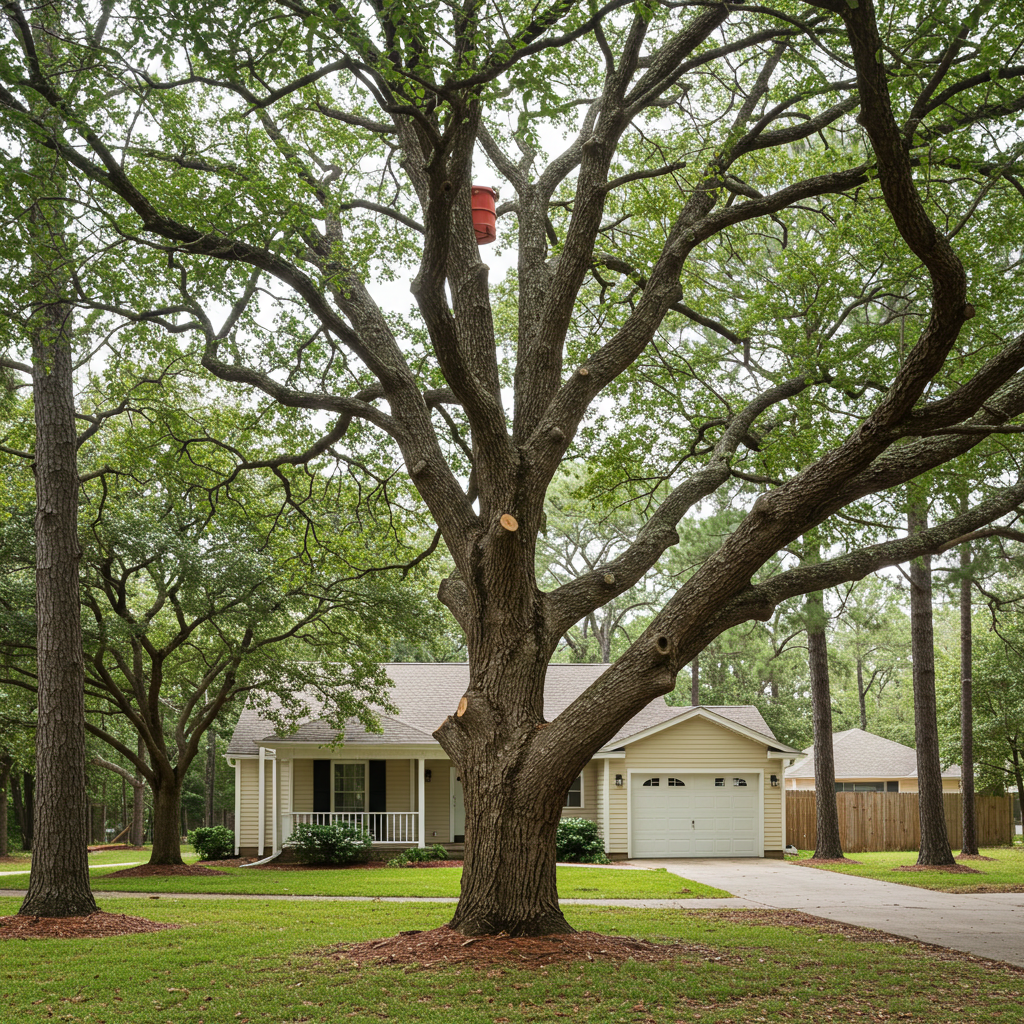
Protect Your Tampa Home: A Homeowner's Guide to Identifying & Preventing Tree Hazards
What are the most common tree hazards Tampa homeowners face?
While Tampa's lush canopy adds immense beauty and value to properties, the unique climate, including frequent storms and intense humidity, presents specific challenges that can turn a beautiful tree into a potential hazard. Understanding these common risks is the first step in proactive property protection.
- Dead or Decaying Branches: This is perhaps the most obvious and widespread hazard. Dead branches can fall unexpectedly, especially during high winds or heavy rains, posing a threat to people, vehicles, and structures below. Decay can spread quickly, compromising the entire tree's structural integrity.
- Weak Branch Attachments: Some trees naturally form narrow, V-shaped crotches where two branches meet. These attachments are inherently weaker than U-shaped ones and are highly susceptible to splitting, especially in high winds, leading to significant limb failure.
- Cracks and Splits in Trunks or Limbs: These can indicate internal decay, severe stress, or structural weakness. Even small cracks can widen over time, jeopardizing the tree's stability and making it prone to breaking apart.
- Leaning Trees: A slight lean might be natural for some species, but a sudden or pronounced lean often signals root damage, soil instability, or an uneven distribution of weight. If the lean progresses rapidly, the tree could be on the verge of toppling.
- Pest Infestations and Diseases: Tampa's warm climate can be a breeding ground for various tree pests and diseases. While some only cause aesthetic damage, others can severely weaken a tree's internal structure, making it brittle and dangerous. Common culprits include root rot, cankers, and boring insects.
- Root Damage or Heaving: Tree roots provide anchorage. If roots are damaged by construction, compacted soil, or disease, the tree's stability is compromised. Heaving soil or exposed, girdling roots near the base can indicate root problems that weaken the tree's foundation.
Recognizing these common hazards early can make a significant difference in preventing costly damage or injury.
How can I visually identify a hazardous tree on my property?
A thorough visual inspection of your trees, ideally performed several times a year and especially after severe weather, can help you catch warning signs before they escalate. Here's a homeowner-friendly checklist for what to look for:
Step-by-Step Visual Inspection:
- Check the Canopy:
- Dead Branches: Look for branches without leaves, or with discolored/brittle leaves, that haven't shed during the appropriate season. Scrape a small piece of bark; if it's dry and brown underneath, the branch is likely dead.
- Sparse Foliage: A lack of leaves or abnormally small/discolored leaves in parts of the canopy can indicate stress, disease, or root problems.
- Broken/Hanging Branches: "Widowmakers" are broken branches still caught in the canopy. These are extremely dangerous and can fall at any moment.
- Examine the Trunk:
- Cracks and Splits: Inspect the entire trunk for vertical or horizontal cracks, especially at the base or where major limbs attach.
- Cavities and Holes: Look for hollow areas, old wounds, or holes that extend into the trunk. These can signify internal decay.
- Fungal Growth: Mushrooms or conks growing on the trunk or at the base often indicate significant internal decay. The fungus you see on the outside is just the fruiting body of a much larger organism inside the tree.
- Insect Activity: Sawdust-like frass, exit holes, or sap oozing from the trunk can be signs of boring insects that compromise the tree's structural integrity.
- Old Wounds/Scars: Assess any past damage for signs of poor healing or new decay.
- Inspect the Base and Roots:
- Heaving Soil: Look for soil that is pushed up or cracked around the base of the tree, which can indicate roots are failing or the tree is shifting.
- Exposed Roots: While some surface roots are normal, unusually exposed or damaged large roots can be a concern.
- Girdling Roots: Roots that encircle the trunk, sometimes below the soil line, can strangle the tree and weaken its anchorage.
- Trunk Flare: The trunk should flare out gradually at the base, like an elephant's foot. If the trunk goes straight into the ground, it could indicate planting too deep or root issues.
- Observe the Overall Form:
- Significant Lean: Note if the tree is leaning excessively or if the lean has increased over time, particularly after storms.
- Uneven Growth: An unusually lopsided canopy might indicate a structural imbalance that could lead to failure.
These visual cues are vital, but remember, what you see on the surface may only be part of the story.
When should I call a professional arborist for tree hazard assessment in Tampa?
While homeowner vigilance is important, certain situations absolutely warrant the expertise of a certified arborist. These professionals have the training, tools, and experience to accurately diagnose complex tree issues and recommend safe, effective solutions. Don't hesitate to call if you notice any of the following:
- Any Major Hazard Identified: If you spot significant cracks, large dead branches, substantial decay, or a pronounced lean, it's time for a professional assessment. These issues require more than just observation; they need expert evaluation.
- Tree is Near a Structure or Power Lines: If a potentially hazardous tree is close to your home, garage, fences, or power lines, the risk of property damage or power outages is high. Professional intervention is crucial for safe removal or mitigation.
- After a Severe Storm: Even if a tree appears fine after a hurricane or severe thunderstorm, it may have sustained internal damage not visible to the untrained eye. An arborist can assess hidden weaknesses and prevent future failures.
- Complex Pest or Disease Issues: If you suspect a serious pest infestation or disease that you cannot identify or treat effectively, an arborist can provide a precise diagnosis and tailored treatment plan.
- Internal Decay is Suspected: If you see fungal bodies (mushrooms/conks) on the trunk or at the base, it's a strong indicator of internal decay that can't be seen from the outside. Arborists use specialized tools to assess the extent of this decay.
- Concerns About Root Health: Issues like significant root exposure, girdling roots, or unusual soil heaving warrant a professional's deep understanding of tree biology and soil dynamics.
- For Large Tree Pruning or Removal: Attempting to prune large branches or remove a significant tree yourself is incredibly dangerous. Arborists have specialized equipment and training to perform these tasks safely.
A certified arborist's assessment provides peace of mind and professional guidance, ensuring the safety of your property and the longevity of your trees.
What proactive steps can Tampa homeowners take to prevent tree hazards?
Preventing tree hazards is an ongoing process that goes beyond just reactive measures. By adopting a proactive approach, Tampa homeowners can significantly reduce risks and foster healthier, more resilient trees.
- Regular Professional Pruning: Scheduling routine pruning with a certified arborist is paramount. Proper pruning removes dead, diseased, or weak branches, improves tree structure, and reduces wind resistance. This is especially important for hurricane preparedness in Tampa.
- Appropriate Watering and Fertilization: Healthy trees are more resistant to pests, diseases, and environmental stress. Ensure your trees receive adequate water, especially during dry spells, and consider professional fertilization if soil tests indicate nutrient deficiencies.
- Monitor for Pests and Diseases: Be observant! Regularly check your trees for signs of insect activity (chewed leaves, sawdust, exit holes) or disease (discolored leaves, cankers, unusual growths). Early detection allows for prompt and more effective treatment.
- Avoid Construction Damage: Tree roots are easily damaged during construction projects, even those not directly beneath the tree. Establish protection zones around trees, especially their root systems, to prevent compaction or injury.
- Mulch Properly: Applying a 2-4 inch layer of organic mulch around the base of your trees (keeping it a few inches away from the trunk) helps retain moisture, regulate soil temperature, and reduce competition from weeds. This promotes healthy root growth.
- Consult for Young Tree Training: For newly planted trees, having an arborist establish a good structural foundation through early pruning can prevent future hazards like weak branch attachments and co-dominant stems.
- Annual Tree Health Assessments: Consider having a certified arborist conduct an annual or biennial comprehensive tree health and risk assessment. This allows professionals to spot subtle issues you might miss and develop a long-term care plan.
By taking these proactive steps, you're not just preventing hazards; you're investing in the long-term health, beauty, and safety of your property's valuable trees.
Protecting your Tampa home from potential tree hazards is a responsibility that blends homeowner awareness with expert professional care. By understanding common risks, knowing how to visually inspect your trees, and recognizing when to call in the professionals, you can ensure your property remains safe and your trees thrive. For comprehensive tree hazard assessments, professional pruning, and reliable tree removal services in Tampa, trust the experienced team at Tampa Tree Care Specialists. We're dedicated to keeping your trees healthy and your property secure. Contact us today for a consultation!
Need Professional Assistance?
Get a free, no-obligation estimate from our expert local team today.