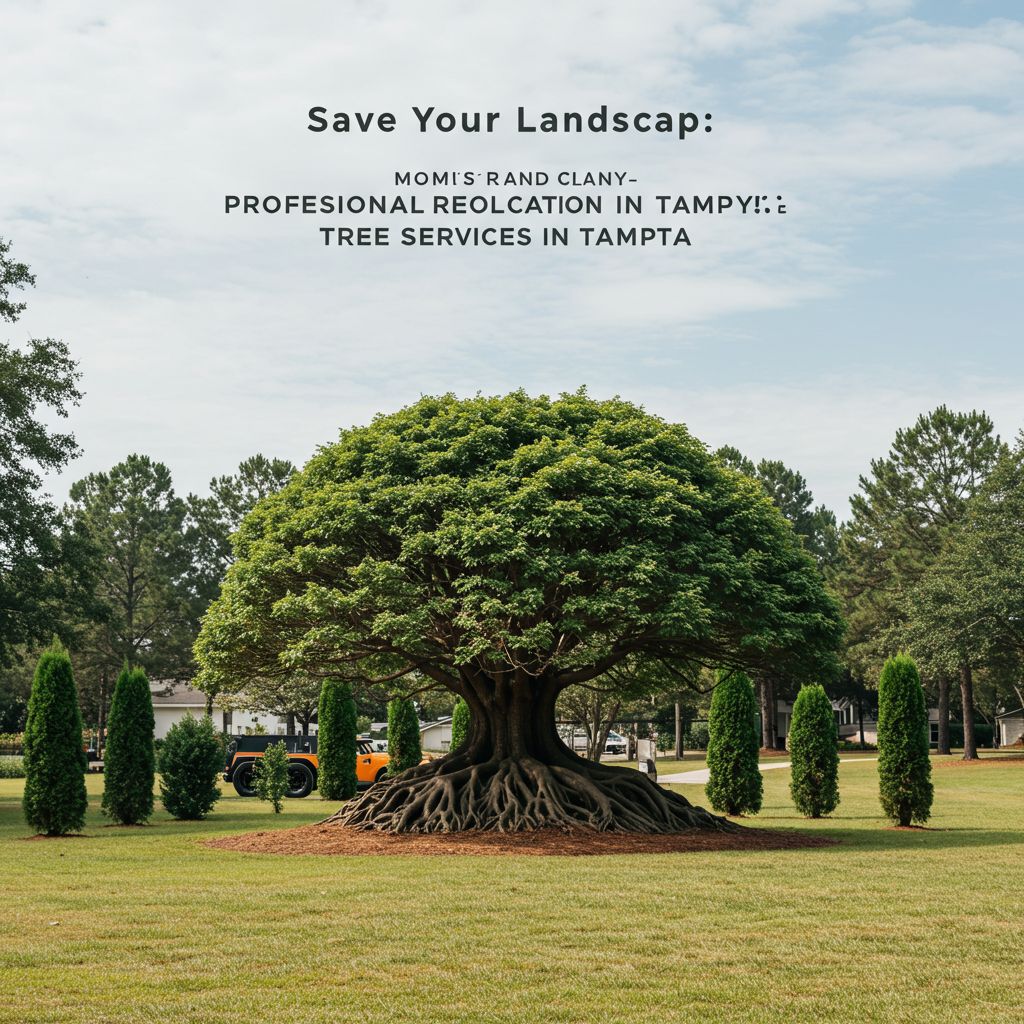
Save Your Landscape: Professional Tree Relocation in Tampa
Yes, successfully relocating a large tree in Tampa is often possible with professional expertise, proper planning, and specialized equipment. While challenging, professional tree movers can assess the tree's health, species, size, and root ball integrity to determine feasibility and maximize survival rates, preserving your landscape investment.
In the vibrant, growing city of Tampa, homeowners frequently face decisions about their trees. Whether it's due to new construction, a landscape redesign, or simply a desire to improve a tree's current location, the thought of moving a mature tree can seem daunting. However, tree relocation, when performed by experienced professionals, offers a sustainable and rewarding alternative to removal. This complex process preserves the ecological and aesthetic value that established trees bring to your property and the local environment. Understanding the nuances of professional tree relocation in Tampa is key to making an informed decision for your landscape.
When is Tree Relocation the Right Choice for Your Tampa Property?
Choosing to relocate a tree is a significant decision driven by various factors unique to each property owner's circumstances. It's not merely about moving an obstacle; it's about enhancing your landscape while preserving valuable natural assets. Here are common scenarios where professional tree relocation proves to be the ideal solution in Tampa:
- Construction or Home Renovation: When adding a new extension, pool, or driveway, a cherished tree might be in the way. Rather than sacrificing it, relocation allows you to continue enjoying its benefits in a new spot.
- Landscape Redesign and Aesthetic Improvement: You might envision a new layout for your garden, or a tree might have grown to overshadow an area excessively. Moving it can open up space, improve light, or create a more balanced aesthetic.
- Saving a Sentimental or Heirloom Tree: Some trees hold deep personal value, perhaps planted for a special occasion or passed down through generations. Relocation ensures these memories and connections are preserved.
- Improving Tree Health or Site Conditions: A tree might be struggling in its current location due to poor soil, root competition, or inadequate sunlight. Moving it to a more suitable environment can significantly improve its long-term health and vitality.
- Enhancing Property Value and Curb Appeal: Strategically placed, healthy mature trees significantly boost a property's curb appeal and market value. Relocation can optimize a tree's contribution to your home's overall attractiveness.
Each of these situations presents a unique opportunity to leverage professional tree relocation, ensuring your landscape evolves without losing its established beauty.
What Factors Determine if a Tree Can Be Successfully Moved in Tampa?
Not every tree is a candidate for relocation, especially in Tampa's specific climate and soil conditions. Professional arborists consider several critical factors to assess the feasibility and maximize the success rate of a tree transplant. These considerations are vital for protecting your investment and the tree's survival.
- Tree Species: Certain tree species handle transplanting better than others. For instance, many palm varieties, live oaks, and magnolias commonly found in Tampa often have a higher success rate if moved correctly. Pines and some other species can be more sensitive. An arborist's knowledge of native and adapted Tampa flora is invaluable here.
- Tree Size and Age: Generally, smaller and younger trees are easier to move due to their more compact root systems and lower water demands post-transplant. Larger, mature trees can be relocated but require more extensive planning, specialized equipment (like large tree spades or cranes), and a more considerable budget. The larger the tree, the greater the risk.
- Overall Tree Health: Only healthy trees should be considered for relocation. Trees already stressed by disease, pests, or nutrient deficiencies are unlikely to survive the additional shock of transplanting. A thorough health assessment by a certified arborist is a non-negotiable first step.
- Root System Integrity: The critical factor for survival is the root ball. Its size, density, and integrity directly impact the tree's ability to absorb water and nutrients after the move. Professionals meticulously calculate the necessary root ball size based on the tree's trunk diameter and species.
- Soil Conditions at Both Sites: Tampa's often sandy or clayey soils present unique challenges. The compatibility of the soil at the original and new locations is crucial for the tree's adjustment. Soil analysis helps determine if amendments are needed.
- Timing of Relocation: While professional techniques allow for some flexibility, moving trees during their dormant season (typically late fall to early spring) minimizes transplant shock because the tree is not actively growing. In Tampa's mild climate, careful planning can extend this window.
- Destination Site Suitability: The new location must provide adequate space, sunlight, drainage, and soil quality for the tree to thrive long-term. Consideration for future growth and proximity to structures or utility lines is essential.
These detailed assessments are what set professional tree relocation apart, minimizing risks and increasing the chances of a successful transplant in the Tampa environment.
How Do Professionals Relocate Trees Safely and Effectively in Tampa?
Professional tree relocation is a highly specialized process that goes far beyond simply digging up a tree and replanting it. It involves meticulous planning, advanced techniques, and appropriate machinery to ensure the tree's health and the safety of the crew and property. For Tampa Tree Care Specialists, the process is executed with precision and care:
- Initial Assessment and Planning: The first step involves a comprehensive site visit by a certified arborist. They evaluate the tree's species, size, health, and age, as well as the soil conditions at both the current and proposed new locations. They'll also assess accessibility for equipment and potential overhead or underground obstructions. This phase determines the feasibility and develops a detailed relocation plan.
- Root Pruning (If Necessary): For larger, more mature trees, root pruning might be performed several months before the actual transplant. This involves carefully cutting roots a distance from the trunk to encourage the growth of new, fibrous feeder roots closer to the trunk. This 'pre-digging' prepares the tree to better absorb water and nutrients from the smaller root ball it will retain during the move, significantly reducing transplant shock.
- Careful Excavation of the Root Ball: On moving day, specialized equipment such as hydraulic tree spades is often used to meticulously dig out the tree, preserving as much of the root ball as possible. For very large trees or those in inaccessible areas, hand digging combined with cranes may be employed. The root ball is carefully undercut and lifted, ensuring its integrity.
- Preparation for Transport: Once the root ball is freed, it is immediately wrapped in burlap, plastic, or a specialized tree box to protect the roots from drying out and physical damage during transit. The tree's canopy may also be lightly pruned to reduce water loss and make it easier to handle.
- Lifting and Transport: Depending on the tree's size, cranes, specialized flatbed trucks, or large tree spades are used to carefully lift and transport the tree to its new home. Safety is paramount during this stage, with expert operators managing the heavy machinery.
- Replanting at the New Site: The receiving hole is prepared beforehand, ensuring it's wide enough and at the correct depth. The tree is carefully lowered into the new location, ensuring it's oriented correctly and planted at the same depth it was previously. The soil around the root ball is gently backfilled, avoiding air pockets.
- Post-Transplant Care: This is arguably the most critical phase for long-term success. Professionals will install a watering basin, apply mulch to retain moisture and regulate soil temperature, and sometimes install temporary staking for stability. A rigorous watering schedule, regular monitoring for signs of stress, and potential fertilization are recommended to help the tree establish itself in its new environment.
This structured approach, combining arboricultural science with practical expertise, is essential for successful tree relocation in the challenging Florida climate.
What Are the Benefits and Risks of Tree Transplanting in Tampa?
Deciding to relocate a tree involves weighing the significant advantages against potential challenges. For Tampa homeowners, understanding both aspects helps in making an informed decision about this specialized tree service.
Benefits of Tree Relocation:
- Preservation of Mature Trees: The most significant benefit is saving an established tree that would otherwise need removal. This preserves decades of growth and the immediate benefits it provides.
- Instant Landscape Impact: Unlike planting a new, small tree, relocating a mature specimen instantly provides shade, visual appeal, and ecological benefits, dramatically transforming your landscape without waiting years for growth.
- Environmental Contributions: Mature trees significantly contribute to the environment by producing oxygen, absorbing carbon dioxide, filtering pollutants, and providing habitat for wildlife. Relocation maintains these vital services.
- Increased Property Value: Well-established, healthy trees are a proven asset, enhancing curb appeal and potentially increasing your property's market value. Relocation allows you to strategically place these assets for maximum benefit.
- Sentimental Value: For trees with personal history, relocation offers a way to keep them as cherished parts of your home and memories.
Risks of Tree Relocation:
- Transplant Shock: This is the primary risk. All trees experience some degree of stress from being moved, which can manifest as wilting, leaf drop, or slowed growth. Severe shock can lead to death. Professionals use techniques to minimize this.
- High Cost for Large Trees: Relocating mature trees is a labor-intensive process requiring specialized equipment, making it a more significant investment than simple removal and replanting a small tree.
- Potential for Tree Death: Despite best efforts, some trees do not survive the relocation process. Factors like species, age, health, and post-transplant care heavily influence survival rates.
- Long Recovery Period: Even successfully relocated trees often require several years to fully recover and establish their root systems in the new location. Consistent aftercare is crucial during this period.
- Site Limitations: The feasibility of relocation can be limited by the accessibility of the original and new sites for heavy machinery, or the suitability of the new soil and environmental conditions.
By carefully assessing these benefits and risks with a professional arborist, you can determine if tree relocation is the right and responsible choice for your Tampa property.
How Can Tampa Tree Care Specialists Help With Your Tree Relocation Needs?
Successfully moving a tree in Tampa is a complex undertaking that requires specialized knowledge, proper equipment, and a deep understanding of arboriculture. Attempting a significant tree relocation without professional assistance can lead to irreparable damage to the tree, property, and even serious injury.
At Tampa Tree Care Specialists, we bring years of experience and a team of certified arborists dedicated to the health and longevity of your trees. Our process begins with a thorough, expert assessment to determine the viability of relocation, considering all the critical factors unique to your tree and property. We utilize state-of-the-art equipment, including advanced tree spades and lifting gear, ensuring the most careful and efficient handling of your valuable trees.
From meticulous root ball preparation and safe transportation to precise replanting and comprehensive post-transplant care instructions, we manage every step of the process. Our goal is not just to move a tree, but to ensure its long-term health and successful establishment in its new environment.
If you're considering tree relocation for your Tampa property, don't leave it to chance. Contact Tampa Tree Care Specialists today for a comprehensive assessment and a free consultation. Let our experts provide the professional guidance and service needed to preserve your cherished trees and enhance your landscape for years to come.
Need Professional Assistance?
Get a free, no-obligation estimate from our expert local team today.