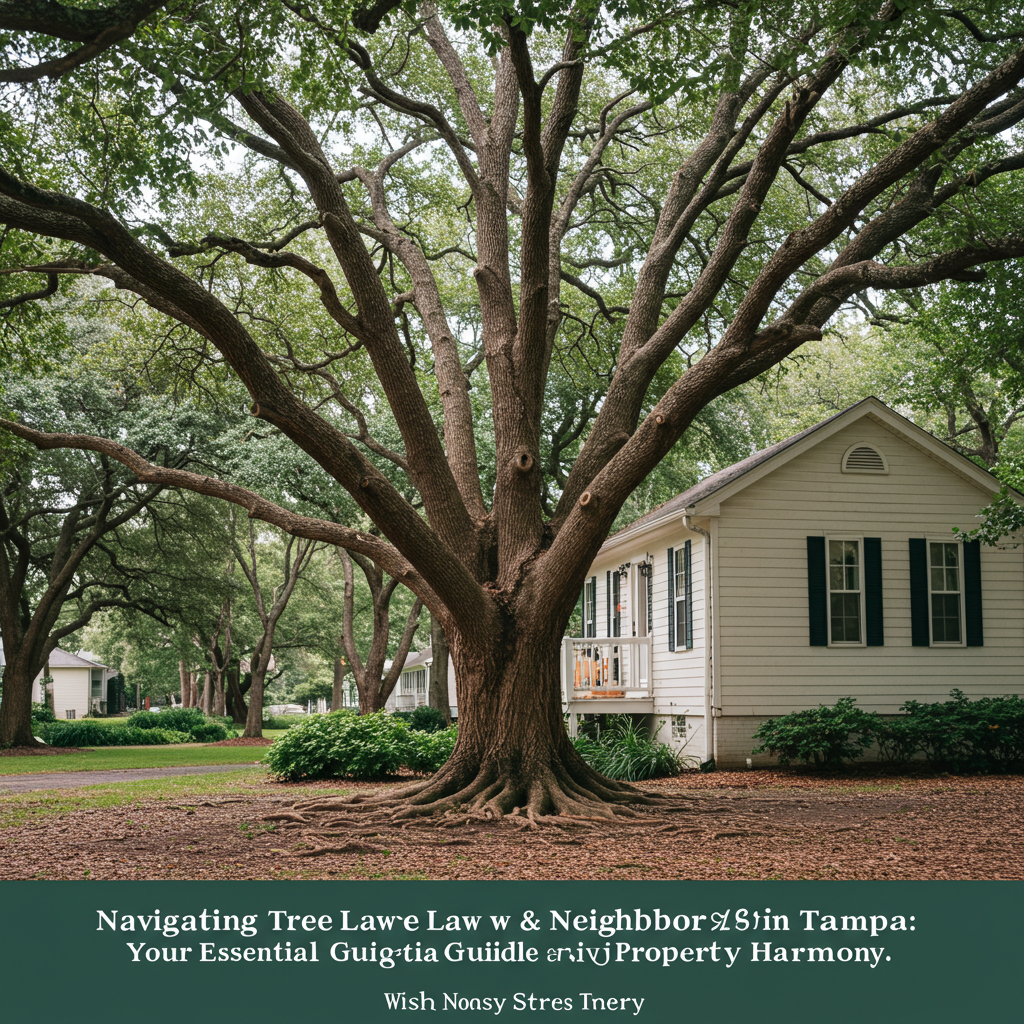
Navigating Tree Law & Neighbor Disputes in Tampa: Your Essential Guide to Property Harmony
In Tampa, most tree-related neighbor disputes are governed by Florida common law, which generally allows property owners to trim encroaching branches or roots up to their property line, provided it doesn't harm the tree. For fallen trees, liability often depends on whether the tree was healthy or neglected before the incident.
What are common tree ownership disputes between neighbors in Tampa?
Tree ownership, especially when property lines intersect, can be a complex and emotionally charged issue between neighbors in Tampa. While trees offer immense beauty and value, they can also be a source of contention. Understanding the typical scenarios is the first step towards a peaceful resolution.
- Overhanging Branches: This is arguably the most frequent dispute. A neighbor's tree branches extend over your property, dropping leaves, fruit, or debris, potentially blocking sunlight, or even threatening structures. Florida law, adhering to the 'self-help' doctrine, generally permits you to trim branches up to your property line. However, this must be done responsibly and not in a way that intentionally damages or kills the tree.
- Encroaching Roots: Less visible but equally problematic are tree roots that extend under a neighbor's property. These can damage foundations, driveways, sidewalks, and plumbing systems. Similar to branches, you typically have the right to sever roots at the property line, but great care must be taken to ensure the tree's stability and health are not compromised. Unwise root cutting can lead to serious damage to the tree, which could then fall and cause more significant problems.
- Fallen Trees and Debris: When a tree or a large limb falls across property lines, especially after Tampa's frequent thunderstorms or hurricanes, determining responsibility for cleanup and damage can be contentious. Generally, if a healthy tree falls due to an 'Act of God' (like a storm), each property owner is responsible for the damage on their own property. However, if the tree was known to be diseased, dead, or otherwise hazardous, and the owner failed to address it, they might be held liable for damages to the neighbor's property due to negligence.
- Tree Health and Risk Assessment: Sometimes, disputes arise not from physical encroachment but from a neighbor's concern about the health of an adjacent tree. If a tree appears sick or unstable, a neighbor might worry about it falling onto their property, and they may press the tree owner to address the issue.
Navigating these issues requires a clear understanding of your rights and, perhaps more importantly, an approach that prioritizes neighborly relations.
How does Florida tree law impact Tampa property owners?
While there isn't a single comprehensive 'tree law' statute in Florida that covers all neighbor disputes, a combination of common law principles and local ordinances guides these situations. Property owners in Tampa need to be aware of these fundamental principles:
- The 'Self-Help' Doctrine: As mentioned, Florida common law allows property owners to trim or remove any portion of a neighbor's tree that encroaches upon their property. This right extends only to the property line. You cannot trespass onto your neighbor's property to trim their tree.
- Duty of Care and Negligence: Property owners have a 'duty of care' to maintain their property in a reasonably safe condition. If you have a tree on your property that you know, or reasonably should know, is diseased, dead, or poses a significant hazard (e.g., hollow trunk, severe lean, pest infestation), and you fail to address it, you could be found negligent if it subsequently falls and causes damage to a neighbor's property. This is especially pertinent in Tampa, given the regular threat of severe weather.
- 'Good Faith' Trimming: While you have the right to trim encroaching portions, you must do so in a 'good faith' manner. This means you cannot intentionally or maliciously trim a tree in a way that would kill it or severely damage its health. Doing so could make you liable for the cost of tree replacement or repair. This is where professional arborist advice becomes invaluable.
- Florida Statute 163.045 - Tree Removal and Local Ordinances: This statute primarily limits local governments (like the City of Tampa) from requiring property owners to replant trees removed for safety reasons or those that pose a threat to property. However, it doesn't negate the need for permits for tree removal in many cases, especially for larger, protected trees. While a separate article on our site covers Tampa tree permits in detail, it's important to remember that even if you're dealing with a hazardous tree, you still need to follow local regulations for its removal.
- Act of God: This legal defense is often invoked after hurricanes or major storms. If a healthy tree falls due to unforeseeable natural events, the owner typically isn't liable for damages to a neighbor's property. The damages become the responsibility of the property owner on which they fall.
Understanding these nuances is crucial for any Tampa homeowner facing or anticipating a tree-related issue with a neighbor.
What steps should you take to resolve a tree dispute with a neighbor in Tampa?
Resolving tree disputes amicably can preserve neighborly relations and avoid costly legal battles. Here’s a step-by-step approach:
- Communicate Calmly and Directly: Before taking any action, approach your neighbor to discuss the issue. Often, they may be unaware of the problem or receptive to finding a solution together. Start with a non-confrontational tone and focus on mutual concerns rather than accusations. For example, instead of “Your tree is destroying my fence,” try “I’m concerned about the roots from the tree near our fence; they seem to be affecting the structure. Have you noticed this?”
- Document Everything: Keep a detailed record of the issue. This includes:
- Photographs or videos of the tree, the encroachment, and any damage.
- Dates and summaries of all communications with your neighbor (in-person, phone calls, emails, letters).
- Estimates for potential repairs or for professional tree service.
- Suggest a Professional Arborist Consultation: Offer to bring in a certified arborist to assess the tree's health, risk, and the impact of any encroachment. An arborist can provide an unbiased, expert opinion on the best course of action and what trimming or removal methods are safe and legal. Sometimes, simply having a professional explain the situation can defuse tension.
- Consider Mediation: If direct communication doesn't resolve the issue, consider a neutral third-party mediator. Many community dispute resolution centers offer mediation services at a low cost or for free. A mediator can help facilitate a constructive conversation and guide both parties toward a mutually agreeable solution.
- Seek Legal Advice (Last Resort): If all other avenues fail, consulting an attorney specializing in property law might be necessary. They can advise you on your legal rights and options based on your specific situation and local Tampa ordinances. Litigation should always be a last resort due to its cost, time, and potential to permanently damage neighborly relationships.
By following these steps, you significantly increase the chances of a peaceful and fair resolution.
When should you involve a professional arborist in a Tampa tree dispute?
Involving a certified arborist is often the smartest first step in any tree-related dispute, even before direct communication with your neighbor, or certainly if initial conversations prove difficult. Here’s why and when their expertise is critical:
- Before Trimming Encroaching Portions: If you plan to exercise your 'self-help' right to trim a neighbor's tree, a professional arborist can advise you on how to do so without harming the tree. Improper trimming can lead to tree decline, disease, or even death, making you liable for damages. An arborist ensures cuts are made correctly and safely, adhering to industry best practices.
- Assessing Tree Health and Risk: If you are concerned about a neighbor’s tree posing a hazard, an arborist can provide a professional risk assessment. They can identify signs of disease, decay, structural weakness, or pest infestation that might indicate a tree is likely to fall. Their written report can be crucial evidence if you need to demonstrate negligence or push for removal.
- Determining Cause of Damage: If a tree has already fallen and caused damage, an arborist can help determine if it was due to an 'Act of God' (e.g., hurricane) or if prior neglect (e.g., unaddressed disease) contributed to its failure. This assessment is vital for insurance claims and determining liability.
- Providing Expert Testimony/Reports: In mediation or legal proceedings, an arborist’s objective assessment and expert testimony carry significant weight. They can explain complex arboricultural issues in an understandable way to non-experts.
- Estimating Costs and Solutions: An arborist can provide accurate estimates for safe removal, pruning, cabling, or other remedial actions, which can be essential for negotiating a fair resolution or for insurance purposes.
- Understanding Local Regulations: While not legal experts, many local arborists are familiar with Tampa’s specific tree ordinances and permitting requirements, which can indirectly impact how disputes are resolved, especially concerning tree removal.
Engaging a professional arborist like those at Tampa Tree Care Specialists provides an impartial, scientific basis for discussion, often turning a contentious argument into a constructive problem-solving session.
What are your liabilities concerning trees on your Tampa property?
As a property owner in Tampa, you bear certain responsibilities and potential liabilities for the trees on your land. Understanding these can help you proactively manage risks and prevent disputes.
- Duty of Reasonable Care: You have a legal obligation to exercise reasonable care in inspecting and maintaining the trees on your property to ensure they don't pose an unreasonable risk of harm to others or their property. This means you should be aware of your trees' health and structural integrity.
- Known or Obvious Hazards: If a tree on your property is visibly diseased, decaying, or unstable – making it a 'patent' or obvious hazard – and you fail to take appropriate action (like professional pruning or removal), you could be held liable if it causes damage. This liability extends to your neighbor's property and to individuals on your property. This is particularly relevant in areas prone to strong winds, like Tampa.
- Impact on Neighboring Properties: While you have rights regarding encroaching branches and roots, your actions in managing your own trees can also affect your neighbors. For instance, if you significantly alter drainage patterns or create excessive shade that damages a neighbor's landscape by removing a tree, while not directly tree law, it can lead to other types of disputes.
- Insurance Considerations: Your homeowner's insurance policy typically covers damage caused by trees falling on your property, regardless of whose tree it was, assuming it was an 'Act of God'. However, if your tree falls on a neighbor's property due to your proven negligence (i.e., you knew it was a hazard and did nothing), your liability coverage might come into play, potentially covering their damages. Always review your policy and consult with your insurance provider to understand your specific coverage.
- Compliance with City Ordinances: Beyond state common law, the City of Tampa has ordinances regarding tree protection and removal. While these are usually about permits for removal of certain protected trees, non-compliance can lead to fines and legal issues, adding another layer of liability.
Proactive tree care, including regular assessments by qualified professionals, is your best defense against potential liabilities and neighborly disagreements.
Navigating tree law and neighbor disputes in Tampa can be challenging, but understanding your rights and responsibilities is key to a harmonious community. When concerns arise, open communication and professional assessment are your most valuable tools. For expert advice on tree health, risk assessment, or safe and effective tree care solutions that adhere to all local regulations, don't hesitate to contact Tampa Tree Care Specialists. Our certified arborists provide impartial, professional guidance, helping you protect your property, your trees, and your peace of mind.
Need Professional Assistance?
Get a free, no-obligation estimate from our expert local team today.