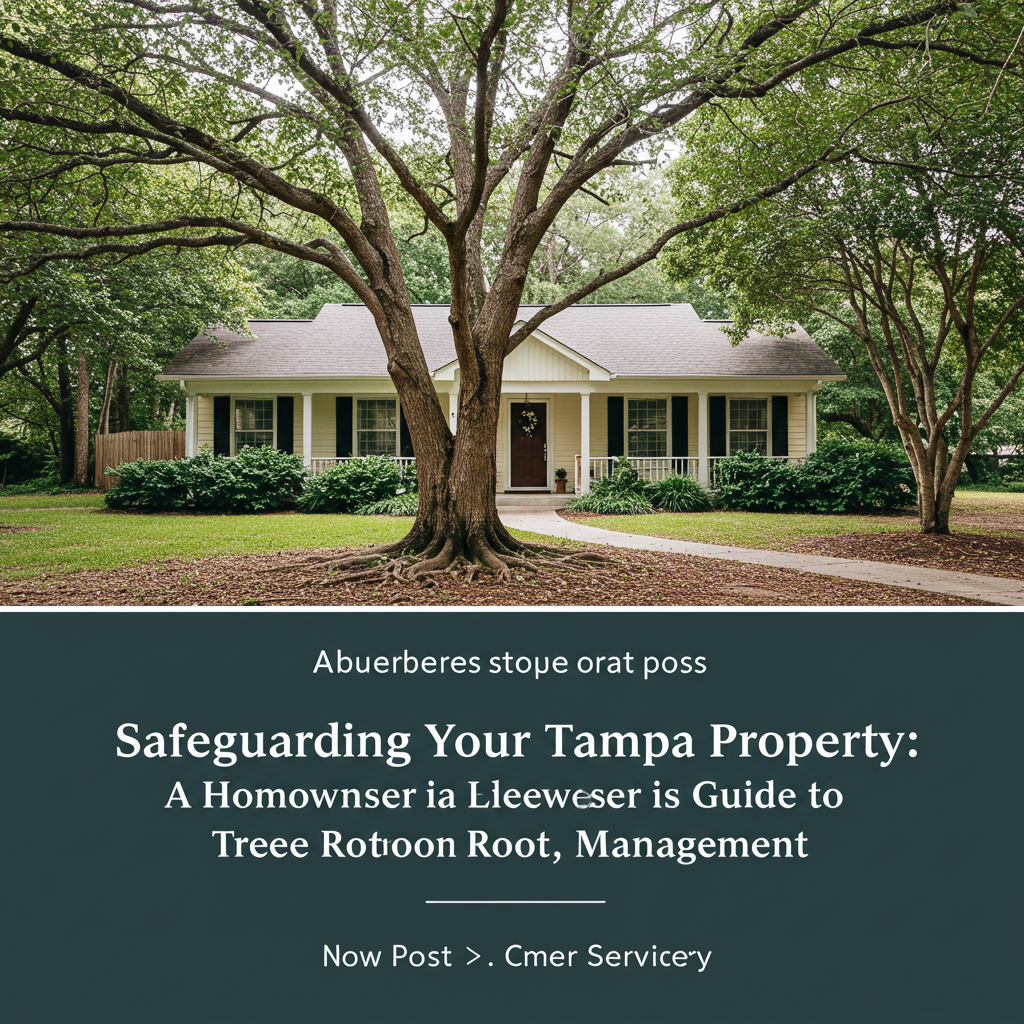
Safeguarding Your Tampa Property: A Homeowner's Guide to Tree Root Management
Tree roots can damage Tampa properties by seeking out water and nutrients, leading to cracked foundations, blocked plumbing pipes, lifted sidewalks, and compromised driveways. Proactive management and professional assessments are crucial to prevent costly structural and utility issues.
Why Are Tree Roots Such a Concern for Tampa Homeowners?
Tampa's lush environment, characterized by its warm climate and abundant rainfall, provides an ideal setting for trees to thrive. While beautiful and beneficial, this vigorous growth also means their root systems can become highly active and expansive. Unlike their visible canopy, tree roots spread out far beyond the drip line, often two to three times the width of the tree's crown. They are constantly searching for water, oxygen, and nutrients, and unfortunately, man-made structures like foundations, pipes, and paved surfaces often present irresistible targets.
The sandy, often loose soil prevalent in many parts of Tampa can also contribute to root migration. Without solid barriers or deeply compacted soil to slow their progress, roots can extend rapidly and deeply. Furthermore, the typical construction practices for homes and infrastructure often involve creating environments where water congregates, such as around foundation footings or within leaky pipes, inadvertently drawing roots towards these vulnerable areas. Understanding this inherent behavior of tree roots is the first step in effective management and property protection.
What Are the Common Ways Tree Roots Damage Tampa Properties?
Tree roots can inflict a variety of costly damages on residential and commercial properties. Recognizing these issues early can save homeowners significant repair expenses.
- Foundation Cracks: Roots, particularly those from large, thirsty trees, can exert immense pressure on building foundations. As roots grow and expand, they can push against concrete slabs and walls, leading to hairline cracks that can escalate into significant structural damage. Additionally, roots can wick moisture away from the soil beneath foundations during dry spells, causing the soil to shrink and leading to differential settling and foundation movement.
- Blocked Plumbing Pipes: One of the most insidious forms of damage occurs when roots infiltrate underground utility lines. Sewer and water pipes are particularly susceptible. Roots are drawn to the moisture and nutrients found within pipes, often entering through tiny cracks, loose joints, or even microscopic pores. Once inside, they can grow into a dense mass, blocking the flow of water and sewage, leading to slow drains, backups, and eventually, ruptured pipes.
- Lifted Sidewalks and Driveways: As roots grow horizontally close to the surface, they can exert upward pressure on paved surfaces. This leads to cracks, heaving, and unevenness in sidewalks, driveways, patios, and even roads. Beyond being an aesthetic nuisance, these uneven surfaces create significant tripping hazards, potentially leading to injuries and liability issues for property owners.
- Compromised Sprinkler Systems: Similar to plumbing pipes, irrigation lines are often shallowly buried and contain readily available water. Tree roots can crush or penetrate these plastic lines, causing leaks, reduced water pressure, and system malfunctions. This can lead to inefficient watering, increased water bills, and damage to landscaping.
- Retaining Wall Failure: Large tree roots growing behind or beneath retaining walls can destabilize them. The persistent pressure can cause walls to bow, crack, or even collapse over time, requiring expensive reconstruction.
How Can Tampa Homeowners Proactively Prevent Tree Root Damage?
Preventing tree root damage is far more cost-effective than repairing it. Here are several proactive strategies Tampa homeowners can employ:
- Strategic Tree Selection and Placement: This is the most crucial preventative measure. Before planting, research the mature size and root system characteristics of the tree species. Opt for trees with less aggressive, deeper root systems when planting near structures. Maintain adequate clearance – generally, plant trees at least 15-20 feet away from foundations, pipes, and paved areas, and even further for very large species.
- Install Root Barriers: For existing trees or when planting new ones near vulnerable areas, consider installing physical root barriers. These impermeable barriers, typically made of high-density plastic or fiberglass, are buried vertically in the ground to redirect root growth downwards and away from structures. Proper installation is key, as incorrectly placed barriers can girdle the tree's roots or lead to instability.
- Proper Watering Practices: Ensure trees receive adequate water, especially during dry periods. Roots are less likely to aggressively seek out moisture from pipes if their primary water needs are met through proper irrigation or rainfall. Deep, infrequent watering encourages deeper root growth, rather than shallow surface roots that are more likely to damage hardscapes.
- Regular Professional Tree Inspections: A certified arborist can identify potential root issues before they become critical. They can assess tree health, growth patterns, and proximity to structures, providing tailored advice on preventative measures or early intervention.
- Maintain Plumbing and Utilities: Regularly inspect your plumbing for leaks. Even small drips can attract roots. Promptly repairing any leaks will significantly reduce the allure for opportunistic roots.
What Professional Solutions Exist for Tree Root Management in Tampa?
When tree roots are already causing problems or a homeowner wants to ensure the long-term health of their trees and property, professional intervention becomes essential. Tampa Tree Care Specialists offer a range of expert solutions:
- Root Pruning: This involves carefully cutting and removing problematic roots that are growing too close to structures. This is a delicate operation that should only be performed by a certified arborist. Improper root pruning can severely stress the tree, compromise its stability, or even kill it. An arborist understands which roots can be safely removed and how to make clean cuts that promote healing.
- Installation of Advanced Root Barriers: While DIY root barriers exist, professional installation ensures the correct depth, placement, and type of barrier for specific tree species and property layouts. Professionals can assess the most effective location and material to prevent future encroachment without harming the tree.
- Deep Root Fertilization: Healthy, well-nourished trees are often better able to resist stress and maintain a balanced growth pattern. Deep root fertilization, applied by professionals, delivers essential nutrients directly to the tree's active root zone, promoting vigorous growth and reducing the need for roots to aggressively search for resources in undesirable locations.
- Air Spading for Root Collar Excavation: An air spade uses a supersonic jet of air to remove soil without damaging roots. This technique is invaluable for exposing the root collar to identify girdling roots (roots that grow around the trunk, strangling the tree) or to assess overall root health and structure. It allows for precise pruning and correction of root defects.
- Tree Removal: In severe cases, especially with large, mature trees planted too close to critical structures or when other management techniques are insufficient, tree removal may be the only safe and viable option. This is a complex and potentially dangerous task that requires specialized equipment and expertise to execute safely and efficiently, particularly in dense urban environments like Tampa.
When Is It Time to Call Tampa Tree Care Specialists for Root Issues?
Don't wait until you see significant damage to act. If you observe any of the following signs, it's time to contact professionals like Tampa Tree Care Specialists:
- Visible cracks or unevenness in concrete: If your sidewalks, driveways, or patio show signs of lifting or cracking near trees, it's a strong indicator of root interference.
- Slow drains or recurrent plumbing issues: Frequent clogs, gurgling sounds, or sewage backups can point to roots infiltrating your underground pipes.
- Tree roots visible above ground near structures: Roots emerging from the soil and heading directly towards your foundation or paved areas are a clear warning sign.
- Trees showing signs of stress: Unhealthy or declining trees might have compromised root systems or could be suffering from issues that make them more prone to causing damage.
- Planning new construction or major landscaping: Consulting with an arborist before beginning projects can prevent future root-related conflicts.
- If you have large, mature trees near your home: Even if no damage is visible yet, proactive assessment can help safeguard your property and ensure the long-term health of your valuable trees.
Tampa Tree Care Specialists possesses the expertise and equipment to accurately diagnose tree root issues, provide effective prevention strategies, and implement professional management solutions. Our certified arborists understand the unique challenges of Tampa's environment and can help you protect your property while preserving the beauty and health of your trees. Contact us today for a comprehensive tree root assessment and a tailored plan to safeguard your investment.
Need Professional Assistance?
Get a free, no-obligation estimate from our expert local team today.