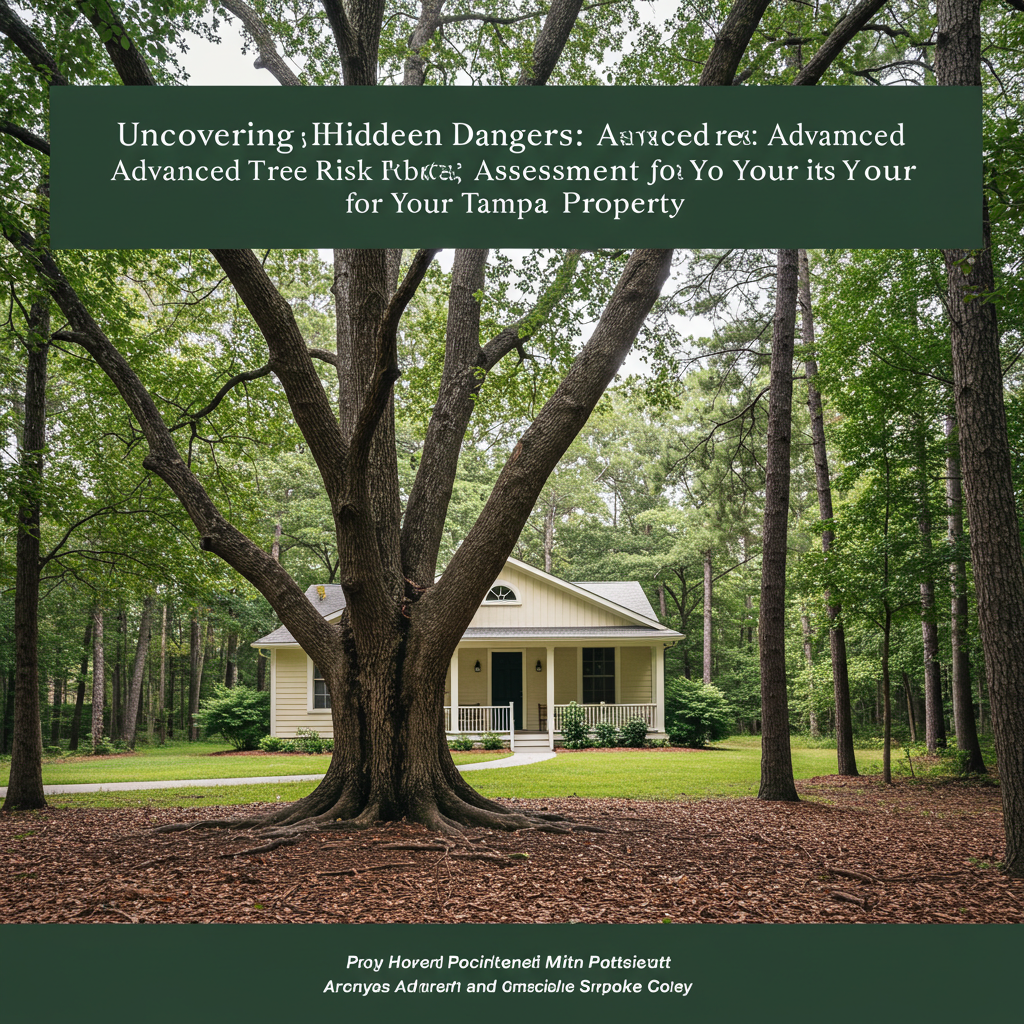
Uncovering Hidden Dangers: Advanced Tree Risk Assessment for Your Tampa Property
Living in beautiful Tampa, Florida, means enjoying lush landscapes and the shade provided by magnificent trees. However, these natural giants, while beautiful, can sometimes pose unseen risks. A tree that appears healthy to the casual observer might be silently harboring internal decay, structural weaknesses, or root issues that could lead to catastrophic failure during a storm or even on a calm day. For homeowners, understanding and addressing these potential dangers is paramount to ensuring the safety of their property, family, and neighbors.
While many resources guide homeowners on spotting obvious tree problems, a truly comprehensive and advanced tree risk assessment requires the expertise and specialized tools of a certified arborist. This process delves much deeper than a simple visual scan, offering a detailed prognosis of a tree's condition and its potential to cause harm. Ignoring these hidden risks can lead to significant property damage, personal injury, and substantial financial costs. This article will explain what goes into a professional tree risk assessment, why it's crucial for Tampa properties, and how it ultimately protects your investment and peace of mind.
What Exactly Does a Professional Tree Risk Assessment Involve in Tampa?
A professional tree risk assessment by a certified arborist is a multi-faceted process designed to systematically evaluate a tree's potential for failure and the likelihood of impacting a target (like your home or a pathway). In Tampa's unique climate, factors like strong winds and specific pest pressures make this assessment even more critical. Here's what a thorough evaluation entails:
- Level 1: Limited Visual Assessment: This initial stage involves a quick, ground-level assessment to identify obvious hazards. While helpful, it's often insufficient for uncovering hidden issues.
- Level 2: Basic Tree Risk Assessment: This is the most common type, involving a detailed visual inspection of the tree and its surroundings by walking around the tree. The arborist will carefully examine various components:
- Overall Tree Health and Vigor: Assessing leaf color, size, density, presence of deadwood, and growth rate. A decline in vigor often signals underlying issues.
- Root Collar and Root Zone Examination: The root collar, where the trunk meets the roots, is a critical area. An arborist looks for girdling roots, decay, insect damage, cracks, or signs of soil compaction that can compromise stability.
- Trunk and Branch Structure: Inspections include looking for cracks, seams, included bark, cankers, cavities, and abnormalities in branch attachment. The arborist also evaluates the tree's overall architecture for structural imbalances or defects.
- Decay Detection: Beyond visual signs, specialized tools may be used. Techniques like sounding (tapping the trunk with a mallet) can indicate internal hollowness. More advanced tools like a resistograph (an increment bore that measures resistance to drilling) can precisely map internal decay without causing significant damage to the tree.
- Pest and Disease Identification: Recognizing specific pests and diseases common to Tampa trees is vital. Many can weaken a tree's structure over time, making it susceptible to failure.
- Site Factors and Environmental Influences: The arborist considers the tree's location relative to targets (buildings, driveways, play areas), soil conditions, drainage, recent construction, and prevailing wind patterns, especially important in hurricane-prone Tampa.
- Level 3: Advanced Tree Risk Assessment: This is reserved for complex situations or when Level 2 assessments raise concerns. It involves detailed investigations, including aerial inspections of the canopy, extensive decay mapping with advanced instruments (e.g., sonic tomography), root excavation, or laboratory analysis of tissue samples.
Each step is meticulously documented, culminating in a detailed report that outlines identified risks, their severity, and recommended mitigation strategies.
How Can I Tell if My Tampa Tree Needs a Professional Assessment?
While some tree problems are apparent, many significant hazards reveal themselves through subtle signs or remain entirely hidden without expert inspection. Being aware of these indicators is the first step in protecting your Tampa property:
- Visible Signs of Distress:
- Sudden Lean or Shift: A noticeable change in the tree's upright posture.
- Large Dead Branches: Especially if they are suspended over targets or show signs of breaking.
- Cracks or Splits in the Trunk or Major Limbs: These can indicate structural failure.
- Cankers or Swellings: Abnormal growths on the bark can signal disease or internal decay.
- Fungal Growth at the Base or on the Trunk: Mushrooms or conks often indicate internal wood decay.
- Cavities or Holes: Even small ones can be indicative of extensive internal rot.
- Subtle, Often Overlooked Indicators:
- Reduced Vigor: The tree isn't growing as robustly as it used to, or its leaves are smaller than usual.
- Premature Leaf Drop or Discoloration: Leaves turning yellow or brown and falling off out of season.
- Excessive Pest Activity: Unusually high numbers of insects on or around the tree.
- Poor Wound Closure: Old wounds that aren't healing properly.
- Scorching or Browning of Leaves: Can indicate root damage or disease.
- Epicormic Growth: Numerous small, weak branches sprouting from the trunk or main branches, often a stress response.
- Environmental and External Factors:
- Recent Construction or Excavation: Any disturbance within the tree's root zone (typically within its drip line) can cause significant damage.
- Storm Damage: Even if a tree withstood a recent storm, it might have sustained internal damage that isn't immediately visible.
- Proximity to Structures: If a large tree is close to your home, garage, or power lines, the risk of failure impacting a target is higher.
- Aging Trees: Mature and over-mature trees naturally have a higher risk of decay and structural decline.
If you observe any of these signs, especially in conjunction with the tree's proximity to areas where people or property are located, it's time to call a professional for a detailed tree risk assessment.
What Are the Benefits of a Thorough Tree Risk Assessment for Tampa Homeowners?
Investing in a professional tree risk assessment is not just an expense; it's a critical investment in safety, property protection, and long-term tree health for your Tampa home. The benefits extend far beyond simply knowing a tree's condition:
- Enhanced Safety and Peace of Mind: The primary benefit is safeguarding your family, pets, and visitors from potential injury caused by falling branches or a collapsing tree. Knowing an expert has thoroughly evaluated your trees provides invaluable peace of mind, especially during Tampa's stormy seasons.
- Property Protection: A falling tree can cause extensive damage to homes, vehicles, fences, and utility lines, leading to costly repairs. Proactive assessment helps identify and mitigate risks before they escalate, protecting your valuable assets.
- Informed Decision-Making: The assessment report provides clear, actionable recommendations. You'll understand the tree's condition, the level of risk it poses, and the best course of action – whether it's pruning, cabling, or removal. This allows you to make decisions based on expert advice, not guesswork.
- Long-Term Tree Health and Value: Identifying problems early allows for timely intervention, which can often save a tree. Proper care based on an assessment can extend a tree's lifespan, maintain its aesthetic appeal, and continue to contribute to your property's value. Healthy trees also provide essential shade, reducing energy costs in Tampa's heat.
- Insurance and Legal Preparedness: In the unfortunate event of tree failure, having documented proof of a professional assessment and adherence to its recommendations can be crucial for insurance claims and liability issues. It demonstrates due diligence in maintaining a safe property.
How Do Tampa Tree Care Specialists Mitigate Identified Tree Risks?
Once a professional tree risk assessment has identified potential hazards, the next crucial step is mitigation. Tampa Tree Care Specialists employ a range of proven arboricultural techniques to reduce or eliminate identified risks, always prioritizing the tree's health and the client's safety.
- Targeted Pruning for Hazard Reduction:
- Deadwood Removal: Eliminating dead, decaying, or broken branches prevents them from falling.
- Crown Thinning: Selectively removing branches to improve air circulation and light penetration, reducing wind resistance and making the tree less vulnerable to storm damage.
- Crown Reduction: Carefully reducing the tree's height or spread to lessen the load on compromised limbs or improve structural balance.
- Corrective Pruning: Addressing structural defects like competing leaders, weak branch attachments, or included bark to improve the tree's long-term stability.
- Cabling and Bracing for Structural Support: For trees with compromised but salvageable limbs or trunks, cabling and bracing can provide supplemental support.
- Cabling: Involves installing high-strength steel cables between major limbs to limit their movement and reduce the risk of splitting.
- Bracing: Uses rigid rods inserted through branches or trunks to provide more rigid support for weak unions.
- Pest and Disease Management: If the assessment reveals specific pest infestations or diseases compromising the tree's health and structural integrity, targeted treatments are implemented. This can include insecticides, fungicides, or cultural practices to improve tree resilience.
- Tree Removal (When Absolutely Necessary): In cases where a tree is deemed an irreversible and severe hazard, or when mitigation efforts are not feasible, safe and efficient tree removal is the recommended course of action. This is always a last resort, but a necessary one to protect lives and property.
- Ongoing Monitoring and Proactive Care: Sometimes, the recommendation might be to monitor the tree's condition over time, especially for slow-developing issues. This often includes implementing a proactive tree care plan that incorporates regular inspections, proper fertilization, and watering to enhance overall tree health and resilience.
By understanding the risks and implementing appropriate mitigation strategies, Tampa homeowners can enjoy the benefits of their trees safely and sustainably for years to come.
Protecting your Tampa home and family from unforeseen tree hazards begins with a proactive approach. An advanced tree risk assessment provides the definitive insights needed to make informed decisions about your property's valuable trees. Don't wait for a storm to reveal hidden dangers. Tampa Tree Care Specialists are equipped with the knowledge, experience, and tools to conduct thorough assessments and implement effective solutions, ensuring the safety and longevity of your landscape. Contact us today for a professional evaluation and safeguard your peace of mind.
Need Professional Assistance?
Get a free, no-obligation estimate from our expert local team today.