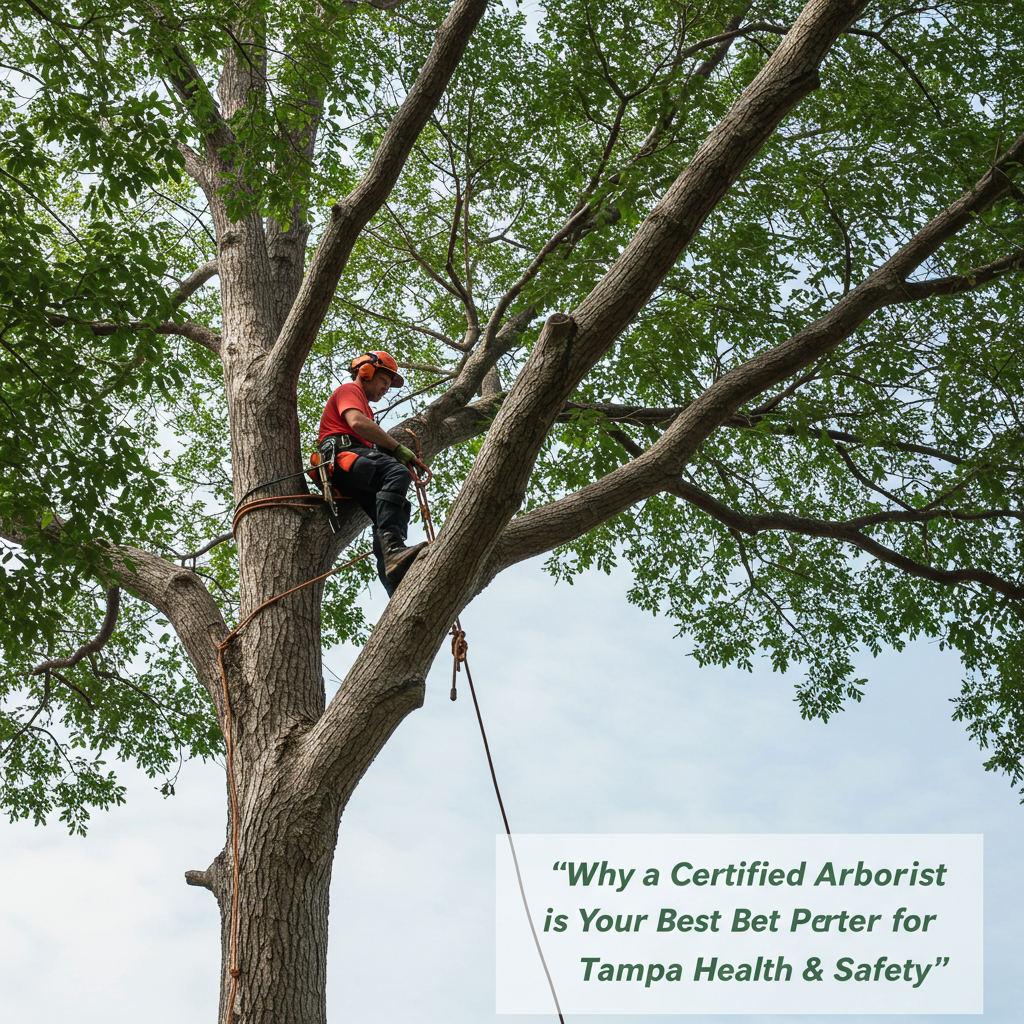
Why a Certified Arborist is Your Best Partner for Tampa Tree Health & Safety
A certified arborist is a highly trained and experienced tree care professional, recognized by the International Society of Arboriculture (ISA). They possess specialized knowledge in tree biology, diagnosis of diseases and pests, and advanced techniques for pruning, removal, and overall tree health management, ensuring the safety and longevity of your landscape in Tampa.
In the vibrant, often challenging, climate of Tampa, your trees are more than just part of the scenery; they're valuable assets that enhance property value, provide shade, and contribute to the environment. However, these living investments require expert care to thrive amidst specific local stressors like sandy soils, high humidity, and the threat of hurricanes. This is where a certified arborist becomes an indispensable partner for homeowners and property managers alike. Unlike general landscapers, an arborist brings a scientific understanding of tree physiology, pathology, and urban forestry, ensuring that every intervention is precise, effective, and beneficial for the long-term health of your trees.
What makes a Certified Arborist indispensable for Tampa homeowners?
Choosing a certified arborist means entrusting your trees to a professional who has demonstrated a high level of competence and knowledge through rigorous examination and continued education. This certification is not merely a title; it signifies a deep understanding of the complex biological needs of trees and how they interact with their environment, particularly within Tampa's unique ecosystem.
- Expert Diagnosis: Tampa's climate can be harsh, leading to various tree stressors. A certified arborist can accurately diagnose problems like:
- Nutrient deficiencies common in sandy Florida soils.
- Fungal diseases accelerated by high humidity, such as Ganoderma root rot or oak wilt.
- Pest infestations specific to the region, like ambrosia beetles or the laurel wilt disease affecting avocado trees.
Their diagnostic skills go beyond surface-level observations, often involving soil analysis, root collar examinations, and detailed canopy inspections to pinpoint the true cause of a tree's decline.
- Safety Assurance: Tree work, especially in a densely populated area like Tampa, carries significant risks. Certified arborists are extensively trained in:
- Safe climbing and rigging techniques to prevent personal injury and property damage.
- Proper use of advanced equipment, from chainsaws to chippers, ensuring efficiency and safety.
- Conducting thorough risk assessments to identify potential hazards, such as weak limbs, unstable trees, or proximity to power lines, before any work begins.
Their adherence to industry safety standards protects not only themselves but also your property and loved ones.
- Long-Term Tree Health Strategies: An arborist looks beyond immediate fixes, developing comprehensive plans for your trees' sustained health and vigor. This includes advising on proper species selection for Tampa's climate, optimal planting techniques, and preventative care measures that can save you significant costs and heartache in the future.
How do Certified Arborists diagnose and treat complex tree issues in Tampa's climate?
The subtropical climate of Tampa presents a unique set of challenges for tree health. High temperatures, abundant rainfall, and specific soil conditions create an environment where certain pests and diseases thrive. A certified arborist's expertise is crucial in navigating these complexities.
- Holistic Tree Assessment: An arborist begins with a comprehensive assessment, examining the tree from its roots to its crown. This includes:
- Soil Analysis: Understanding soil composition, pH, and nutrient levels is vital for tree health, especially in Tampa’s often nutrient-poor sandy soils. An arborist can recommend specific amendments or fertilization plans to address deficiencies.
- Visual Inspection: Checking for unusual growths, discolored leaves, bark cracks, insect activity, and fungal bodies.
- Root Collar Examination: Often overlooked, issues at the root collar (where the trunk meets the ground) like girdling roots or moisture problems can severely impact tree health.
- Precision Treatment Plans: Based on their diagnosis, arborists develop targeted treatment plans that might include:
- Targeted Pruning: Removing diseased, damaged, or dead limbs not only improves the tree's appearance but also prevents the spread of pathogens and reduces overall risk.
- Pest and Disease Management: Implementing integrated pest management (IPM) strategies, which may involve biological controls, cultural practices, or judicious application of environmentally responsible treatments. For example, they can identify and treat common Tampa pests like scale insects or mealybugs that can weaken trees.
- Nutrient Management: Applying slow-release fertilizers or micronutrient injections directly to the tree's root zone to correct specific deficiencies.
- Air Spade Technology: Utilizing specialized equipment to carefully excavate soil around roots without causing damage, allowing for precise root examination, aeration, and treatment of compacted soil or girdling roots.
When is a Certified Arborist essential for high-risk tree removal or advanced care in Tampa?
While many tree care tasks can be handled by general contractors, certain situations absolutely demand the specialized skills and knowledge of a certified arborist to ensure safety, efficiency, and compliance with local regulations in Tampa.
- Hazardous Tree Removal: The removal of large, dead, or diseased trees, especially those near structures, power lines, or high-traffic areas, is inherently dangerous. An arborist is critical for:
- Risk Assessment: Accurately identifying the fall trajectory, potential impact zones, and structural integrity of the tree.
- Advanced Rigging & Crane Operations: Utilizing complex rigging systems and, when necessary, coordinating crane operations to safely dismantle and remove large sections of a tree without damaging property.
- Permit Navigation: Understanding and securing the necessary tree removal permits from Tampa municipal authorities, especially for protected tree species.
- Post-Hurricane Damage Assessment and Cleanup: Tampa is prone to hurricanes, which often leave behind severely damaged or unstable trees. A certified arborist can:
- Prioritize Hazards: Quickly assess which trees pose immediate danger and require urgent attention.
- Salvage Efforts: Determine if a damaged tree can be saved through cabling, bracing, or structural pruning, or if removal is the safest option.
- Safe Debris Removal: Managing large, intertwined debris piles safely and efficiently.
- Complex Pruning & Cabling/Bracing: For mature or historically significant trees, proper pruning techniques are essential for their health and structural integrity. Arborists perform:
- Structural Pruning: Enhancing the tree's natural form and strength.
- Crown Thinning/Reduction: Improving air circulation and reducing wind resistance, crucial for hurricane preparedness.
- Cabling and Bracing: Installing support systems to strengthen weak limbs or split trunks, extending the life of valuable trees. This intricate work requires an understanding of tree mechanics to avoid causing further harm.
What proactive measures can a Tampa arborist recommend for long-term tree health and property protection?
Preventative care is always more effective and often less costly than reactive treatments. A certified arborist can help you establish a proactive tree care plan tailored to your property and the unique conditions of Tampa.
- Regular Health Assessments: Scheduling annual or semi-annual inspections allows an arborist to detect subtle signs of stress, disease, or pest activity before they become severe problems. Early intervention can prevent irreversible damage.
- Strategic Planting Advice: For new construction or landscape renovations, an arborist can provide invaluable guidance on:
- Species Selection: Recommending native or Florida-friendly trees that are well-adapted to Tampa's climate and soil conditions, requiring less maintenance and water.
- Optimal Placement: Ensuring trees are planted at appropriate distances from structures, utilities, and other trees to allow for proper growth and minimize future conflicts.
- Soil Health Management: A key component of proactive care, an arborist can recommend strategies to improve and maintain healthy soil, such as:
- Mulching: Proper application of organic mulch helps retain soil moisture, regulate temperature, and suppress weeds, all critical in Tampa's climate.
- Aeration: Reducing soil compaction, particularly in high-traffic areas, allows for better water and nutrient absorption.
- Hurricane Preparedness Plans: Given Tampa's hurricane exposure, an arborist can develop a specific plan to prepare your trees, including:
- Targeted Pruning: Removing weak or excessive limbs that are vulnerable to high winds.
- Risk Mitigation: Identifying and addressing potential hazards that could impact your home during a storm.
- Post-Storm Recovery Guidance: Providing advice on how to assess and manage trees after a weather event to promote recovery and safety.
By investing in the expertise of a certified arborist, you're not just buying a service; you're securing a long-term partnership that safeguards your green assets. For unparalleled tree health and safety services in Tampa, look no further than the experts at Tampa Tree Care Specialists. Our team of ISA-certified arborists is ready to provide personalized assessments, strategic care plans, and emergency services, ensuring your trees thrive for years to come.
Contact Tampa Tree Care Specialists today for a consultation and experience the difference professional arboricultural care can make.
Need Professional Assistance?
Get a free, no-obligation estimate from our expert local team today.