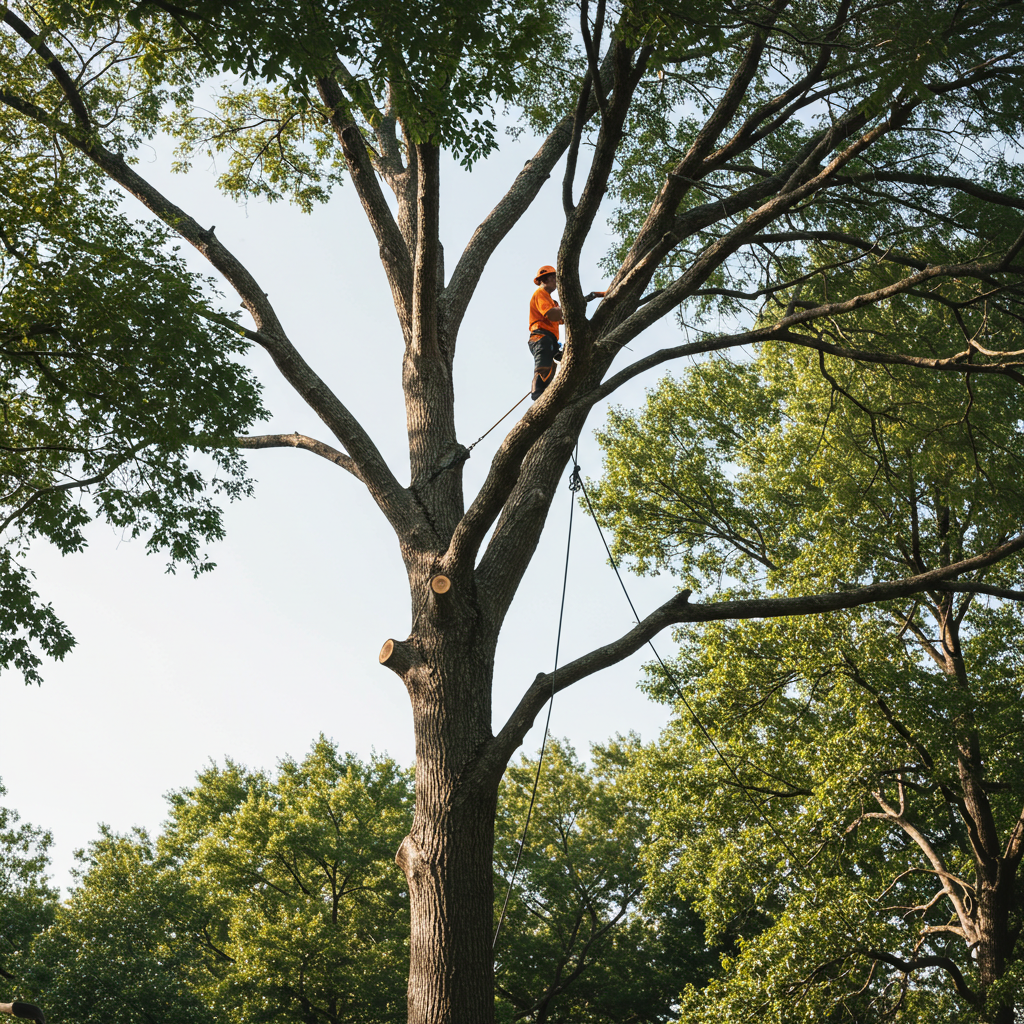
Uncovering Hidden Dangers: When to Call a Professional Arborist for Your Tampa Trees
How Can I Identify Hidden Structural Issues in My Tampa Trees?
Even healthy-looking trees can harbor significant structural weaknesses that pose a risk, especially during Tampa's intense storm seasons. Knowing what to look for can be the first step in preventing serious damage or injury. Ignoring these subtle cues can lead to catastrophic tree failure.
- Weak Branch Unions (Crotches): Look for branches that grow very close together, forming a tight, V-shaped union rather than a strong, U-shaped one. Often, bark can become trapped (included bark) within this union, preventing proper wood formation and creating a weak point that is highly prone to splitting, especially in high winds.
- Root Problems and Ground Heave: The roots are the anchor of your tree. If you notice the soil around the base of the tree heaving, cracking, or if large surface roots appear to be lifting, it could indicate instability. Girdling roots, which grow around the trunk or other roots, can also choke the tree, impairing its stability and health. An arborist can assess root integrity.
- Trunk Wounds and Cavities: Old wounds from past pruning, storm damage, or vehicle impacts can create entry points for pests and decay. While a small wound might heal over, large or deep cavities suggest significant internal decay that compromises the trunk's strength. Tap the trunk; a hollow sound can be a major red flag.
- Asymmetrical Canopy and Imbalanced Growth: A tree with a heavily weighted canopy on one side or significant dead limbs on the other might be structurally imbalanced. This uneven distribution of weight can stress the trunk and root system, making the tree more susceptible to failure during storms.
What Are the Tell-Tale Signs of Internal Decay and Disease in Tampa's Climate?
Tampa's warm, humid climate can unfortunately accelerate tree diseases and decay. Early identification of these issues is paramount to saving your tree or safely removing a hazard. These signs often point to problems far deeper than the surface.
- Fungal Growth (Mushrooms and Conks): The presence of mushrooms, shelf fungi, or conks on the trunk, branches, or at the base of your tree is a definitive indicator of internal decay. These are the fruiting bodies of fungi that are actively breaking down the tree's wood, compromising its structural integrity.
- Excessive Deadwood or Branch Dieback: While some natural shedding of small branches occurs, an abundance of large dead branches within the canopy, or significant dieback of entire sections, is a serious sign. This could point to root damage, disease, or severe pest infestation.
- Discolored or Prematurely Dropping Leaves: If your tree's leaves are turning yellow, brown, or dropping much earlier than expected for its species, it's a strong indicator of stress, disease, or nutrient deficiency. This signals that the tree's vascular system might be compromised.
- Oozing Sap and Borer Holes: Visible sap flowing from the trunk or branches, especially combined with small holes (pinholes or D-shaped holes), suggests the presence of wood-boring insects. These pests tunnel through the tree, disrupting its ability to transport water and nutrients, and weakening its structure.
- Thinning Canopy or Sparse Foliage: A healthy tree should have a relatively full canopy. If your tree's crown appears noticeably sparse, transparent, or if the leaves are smaller than usual, it indicates a decline in health that needs immediate attention.
When Do Tree Cracks, Splits, and Leaning Indicate Serious Danger in Tampa?
Cracks, splits, and leaning are among the most visible and alarming signs of tree distress. Understanding their severity is crucial for timely intervention.
- Trunk Cracks: Not all cracks are immediately dangerous, but deep, vertical cracks that extend into the wood, especially those that appear to be widening or are located near branch unions, are a major concern. Horizontal cracks can indicate significant stress or past damage.
- Fork Splits: When a V-shaped branch union begins to split or show signs of separation, it's a critical structural failure. These can occur suddenly, especially under the weight of heavy foliage or during strong winds, leading to massive branch failure.
- Sudden or Progressive Leaning: A tree that suddenly starts leaning significantly after a storm, or one that has been progressively leaning more over time, is in danger of falling. This often indicates root system failure or a severely compromised trunk. Observe if the soil around the base is also heaving on the opposite side of the lean.
- Hollow or Drum-like Sound: Tapping on the trunk of your tree and hearing a hollow or drum-like sound, rather than a solid thud, can indicate extensive internal decay that has created a hollow core. This significantly reduces the tree's ability to withstand environmental stresses.
Why is Professional Assessment Crucial for Tree Safety in Tampa?
Recognizing these signs is the first step, but accurately diagnosing the problem and implementing the correct solution requires the expertise of a certified arborist. In Tampa's unique environment, where hurricanes and tropical storms are a constant threat, professional tree safety assessments are not just recommended – they are essential.
- Expert Diagnosis: A certified arborist possesses the knowledge and experience to accurately diagnose tree diseases, pest infestations, and structural weaknesses that might be invisible to the untrained eye. They understand the specific challenges and common issues faced by trees in the Tampa Bay area.
- Risk Mitigation: Proactive assessment by professionals helps identify potential hazards before they become a danger to your home, vehicles, or family. An arborist can determine the level of risk a tree poses and recommend appropriate mitigation strategies, from corrective pruning to cabling, bracing, or even safe removal.
- Preservation and Health: Often, early intervention can save a declining tree. Arborists can recommend specific treatments like fertilization, disease management, or structural support that can restore a tree's health and longevity, enhancing your property's value and aesthetic appeal.
- Safe and Efficient Solutions: Dealing with compromised or large trees can be incredibly dangerous. Professional tree service companies like Tampa Tree Care Specialists have the specialized equipment, training, and insurance to perform high-risk tasks safely and efficiently, protecting both their crew and your property.
- Peace of Mind: Knowing that your trees have been thoroughly inspected and cared for by experts provides invaluable peace of mind. You can rest assured that your property is safer and your trees are receiving the best possible care tailored to Tampa's environmental conditions.
Don't wait for a storm to expose hidden dangers in your trees. If you've observed any of these warning signs, or if you simply want a comprehensive evaluation of your property's arboreal health, it's time to consult the experts. Tampa Tree Care Specialists are here to provide thorough tree risk assessments, professional diagnoses, and effective solutions to ensure the safety and beauty of your landscape. Contact us today for an expert evaluation and protect your investment.
Need Professional Assistance?
Get a free, no-obligation estimate from our expert local team today.