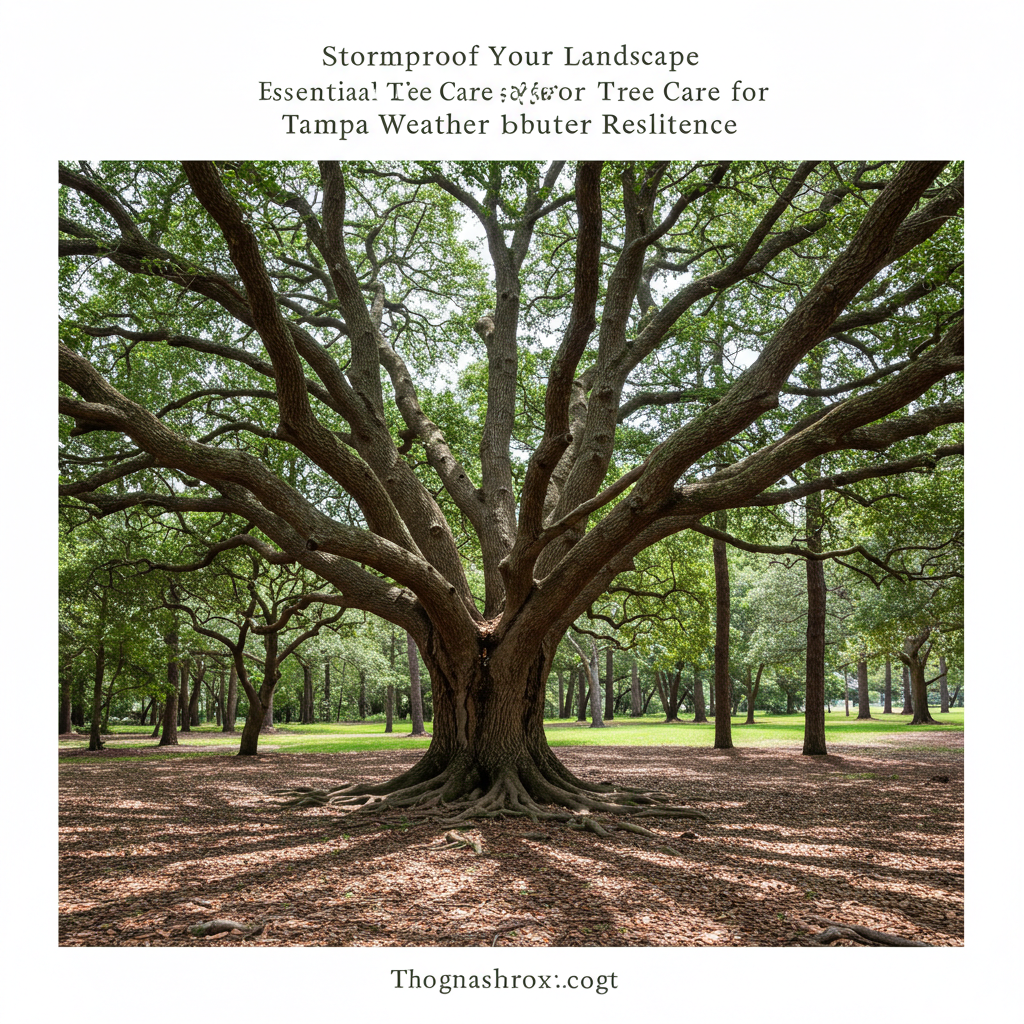
Stormproof Your Landscape: Essential Tree Care for Tampa Weather Resilience
What makes Tampa trees vulnerable to storm damage?
Tampa's unique subtropical climate, while beautiful, presents specific challenges that make local trees particularly susceptible to storm damage. Understanding these vulnerabilities is the first step in effective storm damage prevention. High winds, torrential downpours, and saturated soils—common during our hurricane season and intense thunderstorms—can combine to create devastating effects on even the healthiest trees.
- Wind Shear: Tampa frequently experiences strong winds, which exert immense force on tree canopies. Trees with dense foliage or poor structural integrity act like sails, increasing the risk of uprooting or limb breakage.
- Saturated Soils: Heavy rainfall can quickly saturate our sandy and often shallow soils. When soil becomes waterlogged, it loses its ability to anchor tree roots firmly, making trees much more prone to toppling during high winds. This is a common cause of complete tree failure in Tampa storms.
- Tree Species Characteristics: Certain tree species common in Tampa, such as Laurel Oaks or Water Oaks, are known for having weaker wood or more brittle branches. While beautiful, these trees require diligent structural pruning to mitigate their inherent storm risk. Other species, if not properly cared for, can also develop vulnerabilities.
- Pests and Diseases: Trees already stressed by pests, diseases, or nutrient deficiencies are significantly weaker and less able to withstand the physical stress of a storm. A compromised tree is an accident waiting to happen when severe weather strikes.
- Urban Environment Stress: Trees in urban settings often contend with compacted soil, limited root space, and proximity to buildings and infrastructure. These stressors can inhibit healthy development and reduce a tree's natural resilience.
How can you identify storm risks in your trees?
As a Tampa homeowner, recognizing the early warning signs of a tree at high risk of storm damage is paramount. A careful, routine visual inspection can reveal critical vulnerabilities. Early detection allows for timely intervention, potentially saving your tree and protecting your property from significant damage. This proactive approach is a cornerstone of effective tampa proactive tree care.
- Cracks or Splits: Look for vertical or horizontal cracks in the trunk or major limbs. These are often indicators of internal decay or structural weakness.
- Hollows or Decay: Large cavities or areas of decaying wood on the trunk or branches suggest a compromised internal structure, which can lead to sudden failure during high winds.
- Leaning Trees: A tree that has suddenly started to lean, or one with significant soil heaving around its base, indicates a failing root system that could give way in a storm.
- Dead or Dying Branches: Branches without leaves, or those with discolored, sparse foliage, are often dead or dying. These can easily break off in high winds, becoming dangerous projectiles.
- Weak Branch Attachments (V-Crotches): Branches that grow too close together, forming a 'V' shape rather than a 'U' shape, are inherently weaker and more prone to splitting, especially in species like oak trees.
- Pest Infestations: Visible signs of pests like borers, termites, or significant fungal growth can weaken the tree's wood and reduce its structural integrity.
- Root Collar Damage: Damage to the area where the trunk meets the ground, or roots growing in a girdling pattern around the trunk, can restrict nutrient flow and weaken the tree.
What proactive steps can Tampa homeowners take to protect their trees?
Taking preventative measures before a storm hits is far more effective and less costly than dealing with the aftermath. Proactive tree care not only safeguards your property but also contributes to the long-term health and beauty of your landscape. These expert strategies are designed to enhance your trees' natural resilience against Tampa's challenging weather conditions.
- Structural Pruning: This is perhaps the most critical preventative measure. Expert tree pruning in Tampa involves removing dead, diseased, or weak branches, as well as strategically thinning the canopy. This reduces wind resistance, allowing wind to pass through the tree more easily, and improves the overall structural balance. Removing excess weight and improving branch architecture prevents dangerous limb failures.
- Cabling and Bracing: For trees with inherently weak or multi-stemmed structures, or those with particularly long limbs, cabling and bracing can provide essential supplemental support. Strong cables are installed high in the canopy to reduce stress on vulnerable junctions, while rigid braces can support splitting trunks. This technique, performed by certified arborists, distributes stress and prevents catastrophic failure.
- Root Zone Management: Healthy roots are the anchor of any tree. Ensuring proper soil health through mulching (avoiding volcano mulching), aeration, and proper drainage helps roots grow strong and deep. Avoiding soil compaction around the base of the tree is also vital, as compacted soil restricts root growth and oxygen uptake.
- Regular Watering and Fertilization: Healthy trees are resilient trees. Consistent watering, especially during dry spells, and appropriate fertilization help maintain vigor, making trees more capable of withstanding environmental stressors, including strong winds and heavy rain. A well-nourished tree can recover faster if damaged.
- Pest and Disease Management: Promptly addressing any signs of pest infestation or disease is crucial. A tree weakened by an insect or pathogen is far more likely to suffer severe damage during a storm. Regular inspections can identify these issues early, allowing for targeted treatment.
- Strategic Planting: When planting new trees, consider species known for their storm resilience and ensure they are planted at an appropriate distance from structures and power lines. Proper planting depth and initial care establish a strong foundation.
When should you call a professional arborist for storm prep in Tampa?
While basic visual inspections and minor landscape maintenance can be done by homeowners, assessing complex tree health and implementing advanced protective measures requires the expertise of a certified arborist. A professional brings a wealth of knowledge and specialized equipment to ensure the safety and longevity of your trees, especially when preparing for or recovering from severe weather events. For complex situations, an arborist's assessment is invaluable for comprehensive tampa tree risk assessment.
- Any Signs of Significant Weakness: If you identify any of the risk factors mentioned above—cracks, significant decay, severe leaning, or extensive deadwood—it's crucial to consult an arborist immediately. They can accurately diagnose the issue and recommend the most effective course of action.
- Large, Mature Trees Near Structures: Large trees, particularly those whose branches overhang your home, garage, or other valuable property, pose a significant risk if they are compromised during a storm. An arborist can assess their stability and recommend precise pruning or support systems.
- Trees with Complex Structural Issues: Identifying a weak branch attachment is one thing; safely correcting it or installing a cabling system is another. Arborists are trained in advanced pruning techniques and structural support methods that ensure safety and promote tree health.
- Before Hurricane Season: It is highly recommended to schedule a comprehensive tree risk assessment with a certified arborist before Tampa's hurricane season begins. This proactive inspection allows ample time to address any vulnerabilities and prepare your landscape for the worst.
- After a Storm: Even with the best preparation, storms can cause damage. After a significant weather event, an arborist can safely assess damaged trees, determine if they can be saved, and perform hazardous limb removal or entire tree removals with the necessary equipment and expertise. This is when tampa emergency tree removal services become critical.
By investing in professional tree care from Tampa Tree Care Specialists, you're not just protecting your trees; you're safeguarding your property, your family, and your peace of mind. Our team of certified arborists understands the unique challenges of Tampa's environment and is equipped to provide the highest level of storm damage prevention and care. Don't wait for the next storm; contact us today for an expert assessment and take proactive steps to secure your landscape.
Need Professional Assistance?
Get a free, no-obligation estimate from our expert local team today.