Protect Your Tampa Trees: Unmasking the Silent Threat of Girdling Roots
Trees are vital to Tampa's landscape, providing shade, beauty, and ecological benefits. However, a hidden enemy often goes unnoticed beneath the surface: girdling roots. These constricting roots can slowly strangle a tree, leading to decline, instability, and even premature death. Understanding what girdling roots are, how they form, and what to do about them is crucial for any Tampa homeowner committed to tree health.
What exactly are girdling roots and why do they harm Tampa trees?
Girdling roots occur when a tree's own root system begins to grow around and over the trunk or other major roots, effectively forming a tight collar. This constriction acts like a tourniquet, cutting off the vital pathways through which water, nutrients, and carbohydrates flow between the tree's roots and its canopy. The cambium layer, responsible for new growth, is compressed, hindering the tree's ability to transport essential resources. In Tampa's often humid and occasionally nutrient-deficient soils, any impediment to nutrient uptake can significantly stress a tree. Young trees are particularly susceptible, as their developing root systems are more easily distorted, but mature trees can also suffer from girdling roots that develop over many years. This slow strangulation leads to a gradual decline in health, making the tree more vulnerable to pests, diseases, and storm damage, which is a major concern in hurricane-prone Tampa.
How can Tampa homeowners identify girdling roots before it's too late?
Identifying girdling roots can be challenging because they are often hidden beneath the soil. However, several tell-tale signs above ground can alert Tampa homeowners to a potential problem:
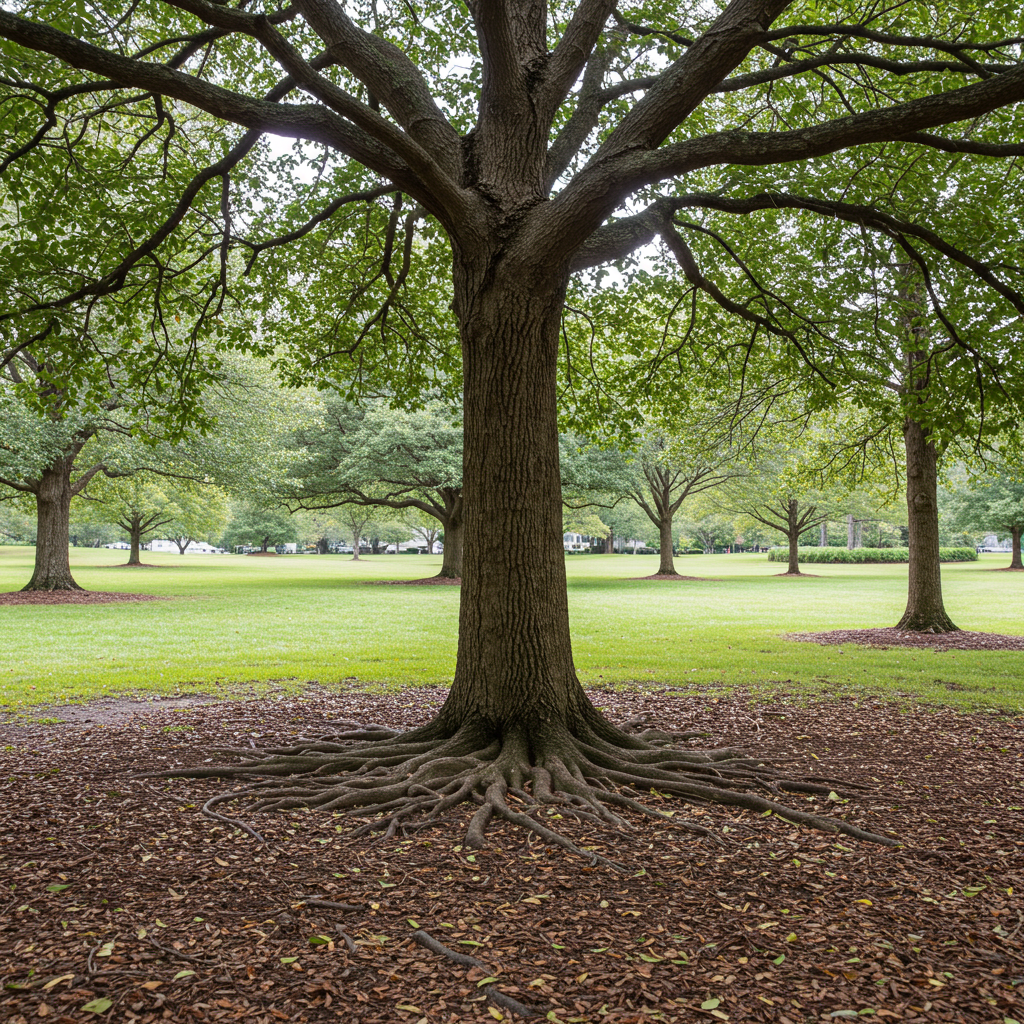
- Lack of a Trunk Flare: A healthy tree's trunk should visibly widen at its base where it enters the soil, resembling an elephant's foot. If the trunk goes straight into the ground like a telephone pole, it's a strong indicator of buried or girdling roots.
- Poor Growth and Vigor: The tree may exhibit stunted growth, smaller-than-normal leaves, or generally appear less vibrant than other trees of the same species and age in the area.
- Yellowing Leaves (Chlorosis): Nutrient deficiencies caused by girdling roots can lead to chlorosis, where leaves turn yellow while veins remain green. This is particularly noticeable in the upper canopy.
- Early Fall Color or Leaf Drop: Trees struggling with girdling roots may show signs of stress, such as premature leaf discoloration or shedding, even outside of the typical season.
- Dieback in the Canopy: Sections of branches, particularly in the upper canopy, may die back due to restricted nutrient flow.
- Flat Side on the Trunk: If a root is tightly pressing against the trunk, it can cause one side of the trunk to appear flattened or indented rather than round.
- Tree Leaning: Severe girdling can compromise the root system's ability to anchor the tree, leading to an unexplained lean.
A proactive inspection of the tree's base and overall health can help spot these issues early, preventing more severe problems for your Tampa landscape.
What causes girdling roots to develop in Tampa's urban environment?
Several factors contribute to the formation of girdling roots, many of which are common in urban and suburban landscapes like those found throughout Tampa:
- Improper Planting Depth: This is arguably the most common cause. If a tree is planted too deep, either at the nursery or during transplanting, roots will grow upwards in search of oxygen and may eventually encircle the trunk.
- Nursery Stock Issues: Trees that have spent too long in small containers often develop circling or pot-bound roots. If these roots aren't corrected before planting, they continue to grow in their confined pattern, leading to girdling.
- Soil Compaction: Heavy, compacted soils, prevalent in many developed areas of Tampa, can restrict root growth outwards, forcing roots to grow in a tighter, circling pattern around the trunk where the soil may be looser.
- Landscape Barriers: Curbs, foundations, sidewalks, or even densely packed planting beds can physically impede outward root growth, causing roots to divert and girdle the trunk.
- Mulch Volcanoes: Piling mulch too high against the trunk can suffocate the root collar and encourage roots to grow upwards and around the trunk.
- Lack of Early Root Pruning: For some species, minor root pruning at the time of planting can be beneficial, but if not done correctly or at all, problematic roots can continue their detrimental growth.
Understanding these causes is the first step in preventing girdling roots and promoting long-term tree health in Tampa.
Can girdling roots be corrected, and how do Tampa arborists address them?
Yes, girdling roots can often be corrected, especially if detected early. However, this process requires expertise and careful execution to avoid further damage to the tree. Tampa Tree Care Specialists employ professional arborists who are trained in the specific techniques needed to address girdling roots:
- Root Collar Excavation: This is the primary method. Arborists carefully excavate the soil around the base of the trunk to expose the root collar – the transition zone where the trunk meets the root system. This allows for a thorough inspection to identify all girdling roots.
- Targeted Root Pruning: Once identified, the girdling roots are carefully pruned and removed. This involves making clean cuts with sterilized tools to minimize damage and promote proper healing. The goal is to remove the offending root while preserving as many structural roots as possible. The size and extent of roots to be removed depend on the tree's overall health and the severity of the girdling. Excessive removal can further stress the tree.
- Air Spading: For more extensive root issues or deeply buried root collars, an air spade (a specialized tool that uses compressed air to loosen and remove soil without damaging roots) can be used. This allows for precise excavation and root identification.
- Monitoring and Aftercare: After correction, the tree will need careful monitoring and appropriate aftercare, which may include proper watering, mulching, and fertilization to help it recover and thrive.
Attempting to remove girdling roots without proper knowledge can severely injure or kill a tree. It's always recommended to consult with a certified arborist in Tampa for accurate diagnosis and treatment.
How can Tampa property owners prevent girdling roots from forming?
Prevention is always better than cure, especially when it comes to tree health. Tampa property owners can take several proactive steps to prevent the formation of girdling roots:
- Proper Planting Depth: Ensure that the tree is planted at the correct depth. The root collar should be visible at or slightly above the soil line. When purchasing nursery stock, check for the root flare and ensure it's not buried too deep in the container.
- Inspect Nursery Stock: Before planting, carefully inspect the root ball. If roots are circling or appear pot-bound, gently tease them apart or make a few vertical cuts through the outer roots to encourage outward growth.
- Dig a Wide Planting Hole: The planting hole should be two to three times wider than the root ball, but only as deep as the root ball. This provides loose soil for roots to spread into.
- Avoid Soil Compaction: When planting, avoid compacting the soil around the root ball. After backfilling, water thoroughly to settle the soil naturally.
- Proper Mulching: Apply a 2-4 inch layer of organic mulch, but keep it a few inches away from the tree's trunk. This
Need Professional Assistance?
Get a free, no-obligation estimate from our expert local team today.