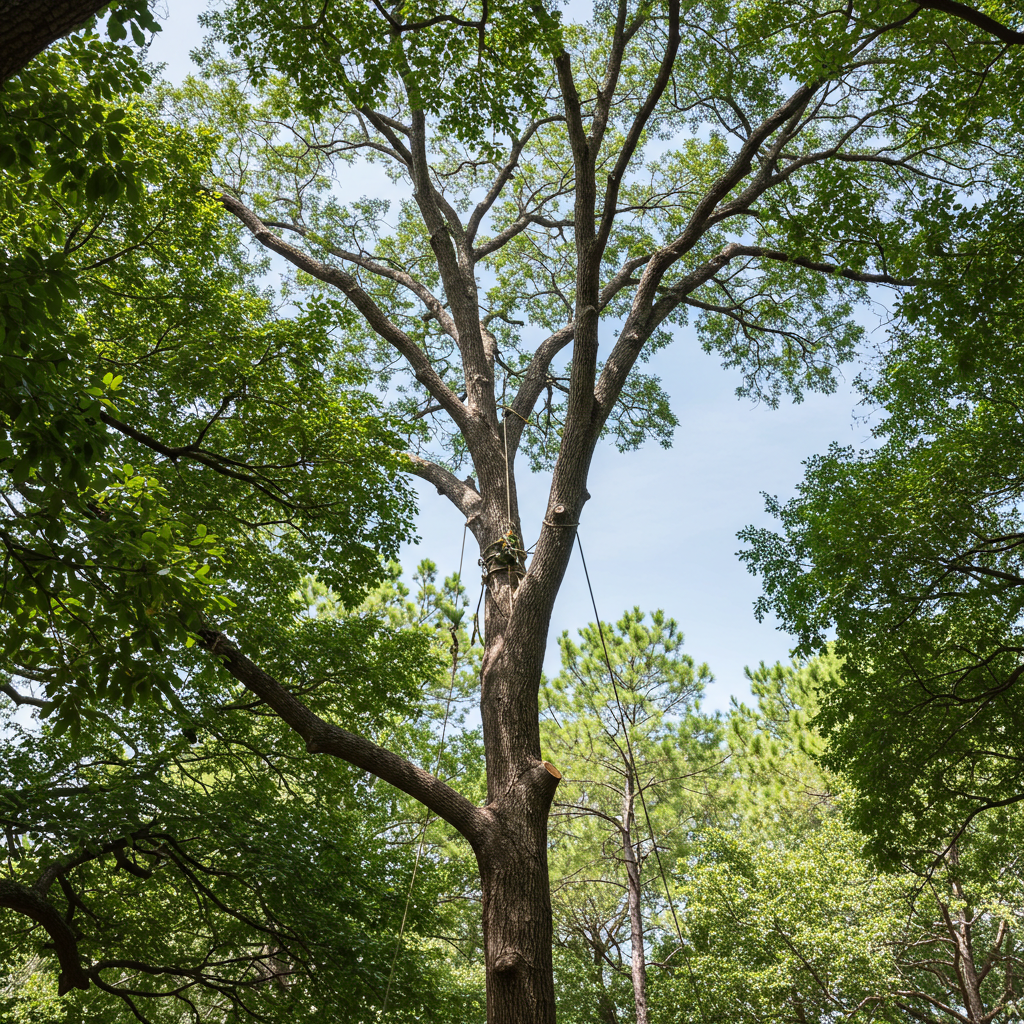
Safeguard Your Tampa Property: Uncovering Hidden Tree Stability Risks
What Are the Early Warning Signs of an Unstable Tree in Tampa?
For Tampa homeowners, understanding the subtle cues of an unstable tree is paramount to protecting property and ensuring safety. While a dramatically leaning tree is an obvious concern, many critical signs are far less apparent. An unstable tree isn't necessarily a sick tree; it might be perfectly healthy but structurally unsound due to growth patterns, past damage, or environmental factors unique to Florida's climate.
Here are crucial early warning signs to look for:
- Compromised Root Flare: The root flare is the natural widening of the trunk at the base, where it meets the ground. If this flare is buried under soil or mulch, or if roots are girdling the trunk, it can lead to decay and weak anchoring. Look for a "telephone pole" appearance rather than a flared base.
- Trunk Cracks and Splits: Not all cracks are critical, but vertical cracks, especially those extending deep into the wood or showing signs of active widening, can indicate significant internal stress or decay. These are common points of failure during high winds.
- Co-dominant Stems: These are two or more main stems of roughly equal size growing from the same point on the trunk, often forming a "V" shape union. This union is inherently weak and highly prone to splitting, particularly in hardwoods, under stress or wind load.
- Included Bark: Occurs when bark is growing inward within a co-dominant stem union, preventing strong wood attachment. This is a tell-tale sign of a very weak union, a major tree stability risk.
- Decay and Fungal Growth: While "sick" trees often show decay, even seemingly healthy trees can have internal decay that compromises their structural integrity. Look for mushrooms or conks (shelf-like fungi) growing on the trunk or at the base, as these are often indicators of significant internal rot.
- Abnormal Branch Architecture: Extremely long or heavy limbs that extend far from the main trunk without adequate tapering or support, especially over structures, can create leverage points that lead to limb failure.
- Dead or Hanging Branches: Beyond aesthetic concerns, large dead branches can indicate larger underlying health or structural issues, and they pose a direct falling hazard.
Detecting these signs early allows for proactive intervention, potentially saving the tree and preventing costly damage. Regular visual inspections are your first line of defense.
How Do Root Problems Affect Tree Stability in Florida's Soil?
Florida's unique sandy soils, high water table, and frequent storms present specific challenges to tree root systems, directly impacting tree stability. The roots are the anchor of any tree, and when compromised, the entire structure is at risk.
- Shallow Root Systems: Many trees in sandy Florida soils tend to develop shallower root systems, as oxygen levels decrease rapidly with depth. This makes them more susceptible to uprooting during hurricanes and strong winds, which are common in the Tampa Bay area.
- Root Damage from Construction: Trenching, grading, and paving during construction can severely damage critical structural roots. Even compacting soil over root zones can suffocate roots, leading to decline and instability years later. In Tampa's rapidly developing areas, this is a significant concern.
- Root Rot: Poor drainage, common in certain areas of Tampa, can lead to root rot diseases. Fungi thrive in waterlogged conditions, attacking and decaying the roots, reducing their ability to absorb water and nutrients, and critically, their ability to anchor the tree.
- Girdling Roots: As mentioned, roots that grow in a circular pattern around the trunk or other roots can constrict the flow of water and nutrients, effectively "strangling" the tree. This weakens the tree over time and can cause significant instability at the root collar.
- Soil Compaction: High foot traffic, heavy equipment, or even excessive vehicle parking around the base of a tree can compact the soil, reducing oxygen and water penetration to the roots. This hinders root growth and can lead to a less robust, less stable root system.
Understanding the impact of root health on overall tree stability is vital. A tree that looks healthy above ground can be severely compromised below, making professional root collar excavations and assessments critical for long-term tree health and safety in Tampa.
When Should I Be Concerned About Tree Leaning or Cracks in My Tampa Yard?
A tree's lean or the presence of cracks can be alarming, but knowing when to be truly concerned—and when a lean is natural—requires a trained eye. In Tampa, where trees often grow in specific directions to optimize sunlight or avoid obstacles, a slight lean isn't always a death sentence.
Tree Leaning:
- Sudden vs. Gradual Lean: A tree that has always had a slight lean is less concerning than one that suddenly starts leaning or has noticeably increased its lean over a short period. A sudden or progressive lean often indicates root plate failure or a weakening of the soil around the roots.
- Soil Heaving: Look for soil heaving or cracking around the base of the tree on the side opposite the lean. This is a strong indicator that the root system is losing its grip on the soil, a critical sign of impending failure.
- Proximity to Targets: Even a minor lean becomes a major concern if the tree or its branches are leaning towards a house, power lines, or high-traffic areas. The potential consequences of failure are much higher.
- Direction of Lean: Trees leaning away from prevailing winds might be natural. However, a tree leaning significantly in the direction of the prevailing wind might be actively failing or have a compromised root system that has been gradually pushed by wind over time.
Trunk and Branch Cracks:
- Vertical Cracks: Longitudinal cracks running up and down the trunk or main branches are significant. If these cracks are deep, actively widening, or extend into the wood, they indicate internal pressure, weakness, or decay. These are often entry points for pests and diseases.
- Horizontal Cracks: Less common, but horizontal cracks across the grain of the wood are extremely dangerous as they signify a complete structural break.
- Cracks at Branch Unions: Any crack originating from a branch union, especially a tight "V" shaped union, signals a high risk of branch or stem failure. Look for included bark as well, which often accompanies these dangerous cracks.
- Exposed Wood and Decay: If a crack exposes the interior wood and reveals decay or hollowing, the structural integrity is severely compromised. Water can enter these cracks, accelerating decay.
When you observe these concerning leans or cracks, immediate professional assessment by a certified arborist is crucial. They can determine the cause and recommend appropriate action, from cabling and bracing to strategic pruning or, if necessary, safe removal.
Why Are Professional Tree Risk Assessments Crucial for Tampa Homeowners?
Given the specific environmental factors in Tampa – from sandy soils and high humidity to the ever-present threat of tropical storms and hurricanes – professional tree risk assessments are not just beneficial; they are often crucial for maintaining a safe property and healthy landscape. While homeowners can spot many external signs, a certified arborist brings an unparalleled level of expertise to evaluate hidden dangers.
What a Professional Tree Risk Assessment Entails:
- Comprehensive Visual Inspection: Beyond surface-level observation, arborists systematically examine the entire tree, from root collar to crown, looking for subtle indicators of structural weakness, disease, and decay.
- Advanced Diagnostic Tools: When necessary, arborists use specialized tools such as resistographs (to detect internal decay without destructive sampling), sonic tomography (to create internal decay maps), or aerial inspections to assess the upper canopy and intricate branch structures.
- Risk Factor Analysis: An arborist considers not only the tree's condition but also its "targets" – anything that could be damaged if the tree or a part of it fails (e.g., homes, vehicles, utility lines, play areas). They assess the likelihood of failure and the potential impact.
- Species-Specific Knowledge: Different tree species prevalent in Tampa (e.g., Live Oaks, Palms, Pines) have unique growth habits, susceptibilities, and failure patterns. An arborist possesses this species-specific knowledge, allowing for more accurate risk predictions.
- Soil and Site Evaluation: They consider the soil conditions, drainage, site history (e.g., construction impact), and surrounding environment to understand how these factors contribute to the tree's overall stability.
- Actionable Recommendations: Following the assessment, you receive a detailed report outlining any identified risks, the arborist's expert opinion on the tree's stability, and specific recommendations for mitigation. These might include:
- Pruning: To remove deadwood, reduce weight, or improve canopy structure.
- Cabling and Bracing: To provide supplemental support to weak limbs or co-dominant stems.
- Root Collar Excavation: To address girdling roots or buried root flares.
- Fertilization and Soil Amendments: To improve overall tree health and resilience.
- Removal: If the tree poses an unacceptable risk that cannot be mitigated.
Investing in a professional tree risk assessment from Tampa Tree Care Specialists is a proactive step that can prevent catastrophic property damage, ensure the safety of your family, and extend the life of your valuable landscape assets. Don't wait for a storm or an obvious failure; our certified arborists have the expertise to uncover hidden stability risks and provide tailored solutions for your Tampa property, ensuring your trees remain safe and beautiful for years to come.
Need Professional Assistance?
Get a free, no-obligation estimate from our expert local team today.