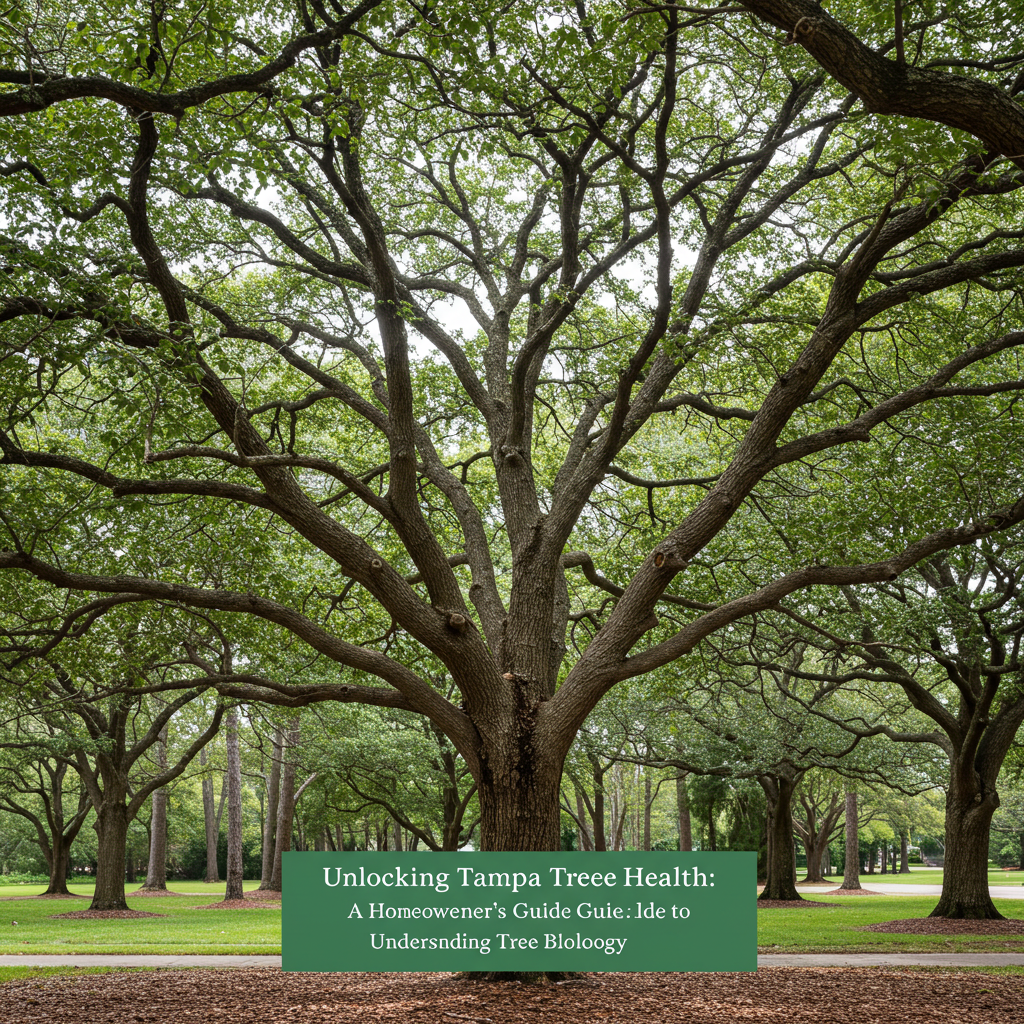
Unlocking Tampa Tree Health: A Homeowner's Guide to Understanding Tree Biology
Why is understanding tree biology important for homeowners in Tampa?
Understanding tree biology is paramount for Tampa homeowners because it provides the foundational knowledge to implement effective, preventative, and responsive tree care strategies. By knowing how trees function from the inside out, you can better identify their needs, prevent common issues, and ensure your landscape thrives in Florida's unique climate. This scientific insight empowers you to make informed decisions for the longevity and vitality of your trees.Trees are much more than just static landscape features; they are complex, living organisms with intricate internal systems. For homeowners in Tampa, where tropical conditions and specific soil types present unique challenges, grasping the basics of tree biology is not just academic – it's a practical necessity. This guide will walk you through the fundamental aspects of how trees live, grow, and interact with their environment, equipping you with the knowledge to cultivate a truly thriving urban forest.
What are the essential parts of a tree and their roles in Tampa's ecosystem?
Every tree is a marvel of natural engineering, with each component playing a vital role in its survival and overall health, especially in Tampa's often sandy or well-drained soils and warm climate.
- Roots: The Tree's Foundation and Lifeline
Beneath the surface, the root system anchors the tree, but its primary function is the absorption of water and essential nutrients from the soil. Roots also store energy reserves and produce growth hormones. In Tampa, where sandy soils can sometimes lead to nutrient leaching, a robust and widespread root system is critical for trees to access sufficient resources. Proper watering and soil amendments directly impact root health, which in turn dictates the health of the entire tree. - Trunk/Stem: The Central Support and Transport System
The trunk provides the main structural support, allowing the tree to stand tall and expose its leaves to sunlight. Internally, the trunk contains two crucial vascular tissues: xylem and phloem. Xylem transports water and dissolved nutrients from the roots up to the leaves, while phloem carries sugars (food) produced during photosynthesis from the leaves to other parts of the tree, including the roots for storage. The outer bark acts as a protective shield against pests, diseases, mechanical damage, and environmental stressors like intense Tampa sun. - Branches: Canopy Structure and Light Capture
Branches extend from the trunk, forming the tree's canopy. They are strategically positioned to maximize light absorption by the leaves. The angle, strength, and arrangement of branches are crucial for both structural integrity and efficient photosynthesis. Proper pruning techniques, informed by an understanding of branch collar and growth patterns, are vital for maintaining strong, healthy branches in our windy, storm-prone region. - Leaves: The Tree's Food Factories
Leaves are the primary sites of photosynthesis, the process by which trees convert sunlight, water, and carbon dioxide into glucose (sugar) – their main source of energy. Leaves also regulate temperature through transpiration, releasing water vapor into the atmosphere. The shape, size, and color of leaves can tell an experienced arborist a lot about a tree's health, nutrient status, or presence of disease, especially for the diverse species thriving in Tampa. - Cambium: The Growth Engine
Often overlooked, the cambium layer is a thin, active tissue located just beneath the bark. It is responsible for the tree's growth in girth, producing new xylem cells (wood) towards the inside and new phloem cells towards the outside. Damage to the cambium can severely impact a tree's ability to transport water and nutrients, highlighting the importance of protecting the trunk from injury.
How do trees create their own food, and what does this mean for soil in Tampa?
Trees are autotrophs, meaning they produce their own food through a process called photosynthesis. This incredible biological feat is fundamental to life on Earth and particularly relevant to understanding tree care.
- The Miracle of Photosynthesis
Inside the leaves, chlorophyll (the green pigment) captures sunlight energy. This energy is then used to convert carbon dioxide (absorbed from the air through tiny pores called stomata) and water (absorbed by the roots) into glucose and oxygen. The glucose fuels the tree's growth, maintenance, and reproductive functions, while oxygen is released into the atmosphere, benefiting all oxygen-breathing organisms. - Nutrient Absorption and the Role of Soil Health
While photosynthesis creates sugars, trees also require a range of macro- and micronutrients absorbed from the soil to facilitate various biological processes. Macronutrients like nitrogen, phosphorus, and potassium are needed in larger quantities, while micronutrients such as iron, zinc, and manganese are crucial in smaller amounts. - Crucial for Tampa Trees: Soil Composition and pH
Tampa's soils can vary significantly, from sandy and well-drained to heavier clays. Ideal soil for trees provides a balance of:- Aeration: Roots need oxygen, so compacted soil hinders growth.
- Water Retention: Enough moisture, but not waterlogging, which suffocates roots.
- Nutrient Availability: Organic matter is key for retaining and slowly releasing nutrients.
- pH Level: Different tree species prefer specific soil pH ranges for optimal nutrient uptake. In Florida, soils can often be alkaline, which can limit the availability of certain micronutrients to some acid-loving species.
- The Underground Network: Mycorrhizal Fungi
Many trees form symbiotic relationships with mycorrhizal fungi in the soil. These fungi extend the tree's root system, vastly increasing its ability to absorb water and nutrients, especially phosphorus. In return, the fungi receive sugars from the tree. Maintaining healthy soil ecosystems, free from harsh chemicals, encourages these beneficial relationships.
What do tree growth patterns and life cycles tell us about their health in Florida?
Observing a tree's growth patterns and understanding its life cycle provides invaluable clues about its overall health and adaptation to the local environment, particularly in Tampa's subtropical climate.
- Annual Growth Rings: A Historical Record
Each year, the cambium layer produces a new layer of xylem, forming what we know as growth rings. The width of these rings can indicate how well a tree fared in a given year – wide rings suggest favorable conditions, while narrow rings can point to stress (drought, pest infestation, nutrient deficiency). While not easily visible without cross-sectioning, understanding their existence reminds us that a tree's past impacts its present and future. - Energy Allocation: Growth, Reproduction, Defense
Trees constantly allocate their energy (glucose from photosynthesis) to different vital functions: primary growth (elongation of shoots and roots), secondary growth (increase in girth), reproduction (flowering and fruiting), and defense mechanisms against pests and diseases. A stressed tree might prioritize survival over vigorous growth or fruit production, leading to stunted development or reduced vitality. - Dormancy (or Lack Thereof) in Subtropical Climates
Unlike trees in temperate zones that undergo a distinct winter dormancy, many trees in Tampa experience a less pronounced or even absent dormancy period due to our consistent warmth. This means they are often actively growing year-round, which can impact their nutrient demands and susceptibility to pests if not properly cared for. However, some native species may still exhibit periods of reduced activity. - Response to Stress: The Tree's Warning Signs
A tree's growth patterns can clearly indicate stress. Slowed growth, premature leaf drop, discolored leaves, unusual branch dieback, or the appearance of excessive fruiting (a survival mechanism) are all biological responses to environmental stressors (e.g., inadequate water, compacted soil, pest attack, nutrient imbalance). Recognizing these changes early is crucial for intervention. - Adaptation to Tampa's Environment
Native and well-adapted non-native tree species in Tampa exhibit growth patterns that are optimized for high humidity, intense sun, and sometimes saline conditions. Understanding these adaptations helps in selecting the right trees for your landscape and providing care that supports their natural biology rather than working against it.
How can understanding tree biology empower your tree care decisions in Tampa?
Equipped with knowledge of how trees function, you can transition from reactive problem-solving to proactive, preventative tree care, leading to healthier, more resilient trees in your Tampa landscape.
- Informed Watering Practices: Deep and Infrequent
Knowing that roots spread widely and deeply to seek water means you'll understand why deep, infrequent watering is superior to shallow, frequent watering. This encourages roots to grow deeper, making the tree more drought-resistant and stable, especially during dry spells in Tampa. - Precise Fertilization: Addressing Specific Needs
Instead of applying generic fertilizers, understanding nutrient uptake and soil biology allows for targeted fertilization based on soil tests and observed tree symptoms. If leaves show yellowing between veins, for example, you might suspect an iron deficiency (common in alkaline soils) rather than a general nutrient lack, leading to more effective treatment. - Effective Pruning: Promoting Health and Structure
Knowledge of how branches grow, how trees compartmentalize wounds, and the role of the cambium layer informs proper pruning techniques. Understanding where to cut (e.g., avoiding flush cuts or leaving stubs), when to prune (minimizing stress during active growth or high pest activity), and why (improving structure, light penetration, air circulation) ensures that pruning benefits the tree rather than harming it. - Early Pest and Disease Detection: Recognizing Symptoms Early
When you understand normal tree physiology, you're quicker to spot deviations. Discolored leaves, abnormal growths, oozing sap, or sudden defoliation become clear indicators of underlying biological distress, prompting earlier intervention before problems become severe. - Selecting the Right Tree for the Right Place: Long-Term Success
A grasp of tree biology helps you choose species that are biologically suited to Tampa's climate, soil, and your specific site conditions. Selecting trees with appropriate root systems, light requirements, and disease resistance for your location will set them up for long-term success and reduce future maintenance issues.
Understanding tree biology isn't just for arborists; it's a powerful tool for every Tampa homeowner who desires a vibrant and healthy landscape. By appreciating the inner workings of your trees, you gain the ability to provide care that truly meets their needs. While this knowledge empowers you, complex tree health issues, significant pruning, or emergency situations often require professional expertise. For expert diagnosis, advanced care, or simply peace of mind, don't hesitate to contact Tampa Tree Care Specialists. Our certified arborists blend biological understanding with practical experience to ensure your trees not only survive but thrive for years to come.
Need Professional Assistance?
Get a free, no-obligation estimate from our expert local team today.