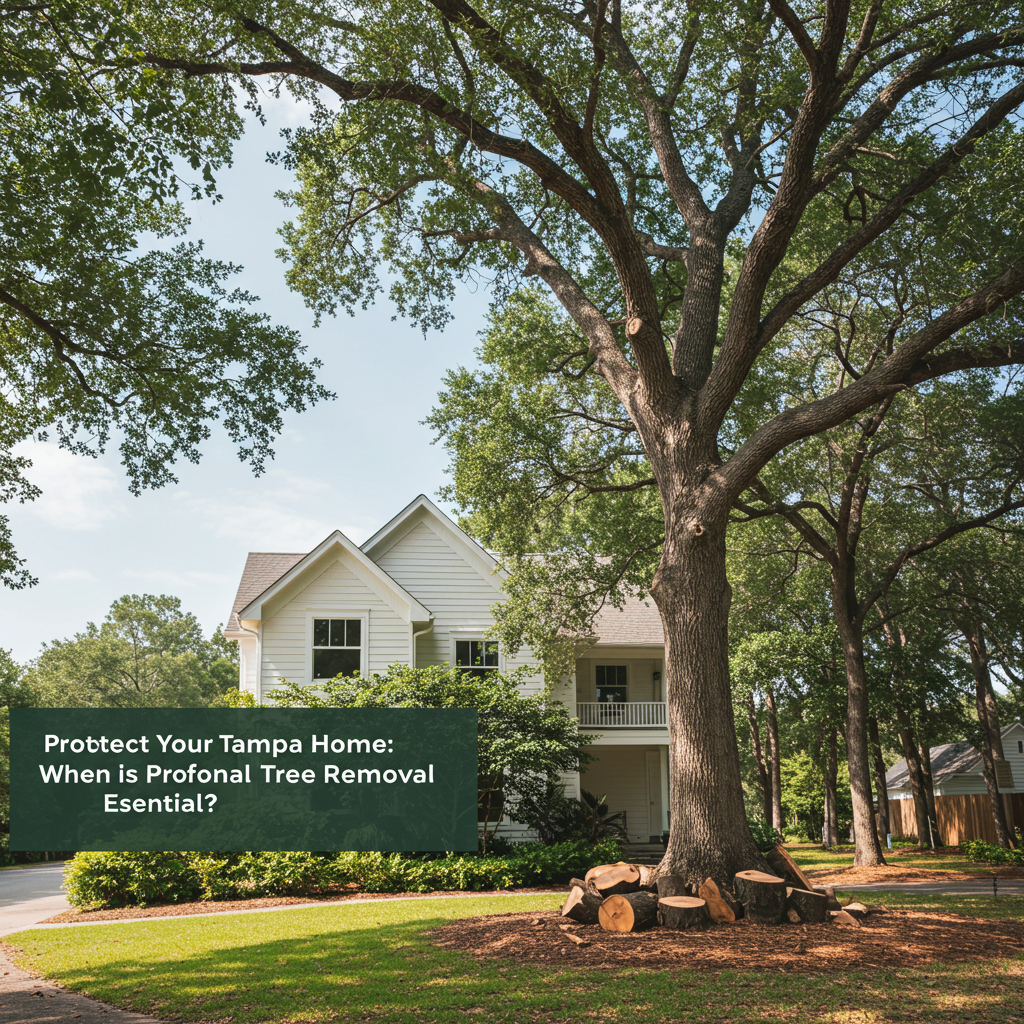
Protect Your Tampa Home: When is Professional Tree Removal Essential?
Trees are a beautiful and valuable asset to any Tampa property, providing shade, enhancing aesthetics, and contributing to local ecology. However, not all trees remain healthy and safe indefinitely. Sometimes, a tree can become a liability, posing a significant risk to your home, family, and other landscape elements. Knowing when to make the tough decision to remove a tree is crucial for property owners in the Tampa Bay area, especially given our unique climate and susceptibility to severe weather events.
A tree in Tampa should be professionally removed when it shows signs of severe disease, extensive pest infestation, structural weakness (cracks, leaning), root damage impacting foundations, or poses an immediate hazard to property or safety due to storm damage or decay. Proactive removal prevents costly damage and ensures long-term property protection.
How Can I Tell If My Tampa Tree is a Hazard?
Identifying a hazardous tree early can prevent significant property damage and personal injury. In Tampa's humid, subtropical environment, trees are prone to certain issues that necessitate careful monitoring. Here are key indicators that your tree might require professional attention and potentially removal:
- Extensive Decay or Disease: Look for large dead branches, discolored leaves, unusual growths (like mushrooms or conks) on the trunk or roots, and soft or crumbling wood, particularly at the base or major limbs. Common diseases in Florida, such as Ganoderma butt rot or lethal yellowing, can severely compromise a tree's structural integrity from the inside out.
- Significant Leaning: A tree that develops a sudden, noticeable lean, especially after a storm, could indicate root damage or instability. A gradual lean may be normal for some species, but changes in angle, combined with soil heaving around the base, are red flags.
- Large Cracks or Splits: Vertical cracks in the trunk or major limbs, especially at points where branches join the main trunk (crotches), signal serious structural weakness. These can be entry points for pests and diseases, and could lead to sudden branch or trunk failure.
- Dead or Hanging Branches: While small dead branches can sometimes be pruned, large dead limbs hanging precariously over structures, walkways, or power lines are immediate hazards that need professional assessment for removal.
- Pest Infestation: While many pests are manageable, severe infestations by borers, termites, or other wood-destroying insects can hollow out a tree, making it structurally unsound. Look for sawdust, exit holes, or tunnels.
- Root Damage: Roots that are visibly lifting driveways, foundations, or sidewalks, or have been severed during construction, can destabilize a tree. Root decay can also weaken anchorage, making the tree vulnerable to high winds.
- Storm Damage: Even seemingly healthy trees can sustain irreversible damage during hurricanes or strong thunderstorms, leading to split trunks, major limb loss, or root plate failure.
If you observe any of these signs, it's crucial to contact a certified arborist for a professional assessment. Their expertise can accurately determine the tree's health and risk level.
What Are the Risks of Delaying Tree Removal in Tampa?
Procrastinating on the removal of a hazardous tree in Tampa carries numerous risks that can far outweigh the cost of professional tree removal services. The subtropical climate, with its intense heat, heavy rainfall, and hurricane season, only amplifies these dangers:
- Property Damage: The most immediate and often most expensive risk is damage to your home, vehicles, fences, or utility lines. A falling branch or an entire tree during a storm or simply due to internal decay can cause extensive structural damage, leading to costly repairs and insurance claims.
- Personal Injury or Fatality: Falling limbs or a collapsing tree pose a severe threat to human life. This is especially true if the tree is near high-traffic areas, children's play zones, or frequently used outdoor spaces.
- Spread of Disease and Pests: A diseased or infested tree can act as a reservoir, spreading pathogens or insects to healthy trees on your property or even to neighboring properties. This can lead to a larger problem and potentially more tree removals down the line.
- Increased Cost of Emergency Services: If a hazardous tree is left unattended until it becomes an emergency (e.g., falls on your house during a hurricane), the cost of emergency removal is typically much higher than a planned, proactive removal. Access can be more difficult, and the urgency demands immediate action, often outside of normal business hours.
- Legal Liabilities: If your hazardous tree causes damage or injury to a neighbor's property or person, you could be held liable for the damages. Taking proactive steps demonstrates due diligence and helps mitigate such risks.
Acting swiftly once a hazard is identified is not just about protecting your investment; it's about ensuring the safety and well-being of everyone around your property.
What Does Professional Tree Removal in Tampa Involve?
Tree removal, especially for large or hazardous trees, is a complex and dangerous task that should always be handled by experienced, insured professionals. In Tampa, specific regulations and environmental factors also come into play. Here’s what the process typically involves:
- Arborist Assessment and Planning: A certified arborist will conduct a thorough inspection of the tree, its surroundings, and potential risks. They'll develop a detailed removal plan, considering factors like power lines, nearby structures, landscape features, and optimal felling direction.
- Permitting and Regulations: Depending on the tree species, size, and location (especially if it’s a protected tree like an oak or cypress, or if you're in a specific Tampa municipality), a permit from the city or county may be required before removal. Professional tree services are familiar with these local regulations and can often assist with the permitting process.
- Safety Precautions and Equipment: Safety is paramount. The team will cordon off the area, use specialized climbing gear, ropes, rigging, and sometimes heavy machinery like cranes or bucket trucks to safely dismantle the tree. This prevents uncontrolled falls and protects surrounding property.
- Sectional Dismantling vs. Felling: For trees in tight spaces or near structures,
Need Professional Assistance?
Get a free, no-obligation estimate from our expert local team today.